The STRONG GRID Act of 2026 promotes national energy resilience by establishing regulatory standards for microgrids, creating state-administered grant programs, and providing technical assistance to accelerate the deployment of innovative grid technologies.
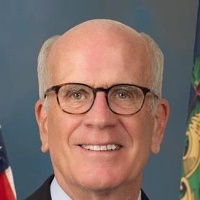
Peter Welch
Senator
VT
The STRONG GRID Act of 2026 aims to modernize the nation’s electric infrastructure by promoting the deployment of microgrids and enhancing grid resilience. The bill requires states to establish regulatory frameworks for microgrid interconnection and resilience valuation, while providing $700 million in federal funding for state-administered grants and innovative pilot projects. Additionally, it mandates that the Department of Energy provide technical assistance and develop best practices to help utilities and regulators integrate these advanced energy technologies.
STRONG GRID Act of 2026: $700 Million Boost for Microgrids to Keep Lights On During Storms and Outages
The STRONG GRID Act of 2026 is a massive push to modernize our aging power grid by focusing on 'microgrids'—basically, mini power systems that can operate independently when the main grid goes down. The bill sets aside $500 million for state-run grants and another $200 million for innovative pilot projects, all aimed at making sure a single downed tree or a cyberattack doesn't plunge entire neighborhoods into darkness. It forces states to stop treating these systems like a niche hobby and start figuring out how to plug them into the main system while accurately valuing the peace of mind that comes with a more resilient power supply.
Your Neighborhood, Unplugged
Think of a microgrid like a backup generator for an entire block or a small town. Under this bill, states have one year to start drafting rules that allow these systems—which often use local solar panels or big battery banks—to 'island' themselves. This means if a hurricane or a winter storm knocks out the regional transmission lines, a local hospital, grocery store, or apartment complex could keep their lights on by disconnecting from the chaos and running on their own power. For a small business owner, this could be the difference between losing a week’s worth of refrigerated inventory and staying open as a community hub during an emergency. The bill specifically tells states to figure out how to value this 'resilience,' moving beyond just looking at the cheapest kilowatt-hour to considering what it’s worth to keep essential services running during a crisis (Sec. 2).
Prioritizing the Powerless
The legislation doesn't just throw money at tech companies; it creates a state-administered grant program with a clear focus on rural areas and low-income communities (Sec. 4). To qualify for a chunk of that $500 million, projects are prioritized if they benefit areas where the population earns 80% or less of the median income or live in towns with fewer than 50,000 people. If you’re living in a rural area where the power company takes days to reach you after a storm, this bill is designed to help your local cooperative build a system that doesn't rely on a 50-mile-long wire. However, there is a catch: grant recipients have to pony up at least 25% of the project cost. While that ensures 'skin in the game,' it might be a high hurdle for some smaller, cash-strapped local governments to clear.
The Digital Guardrails
Since microgrids rely heavily on software to manage solar, wind, and batteries, they are potential targets for hackers. The bill addresses this by requiring the Secretary of Energy to develop best practices for cybersecurity and data privacy (Sec. 5). It also funds training for utility workers to manage these real-time systems. For the average ratepayer, the big question is the 'valuation methodology' mentioned in Section 2. States have to decide how the costs of these upgrades are split. While the goal is a more reliable grid, there’s a possibility that if a state doesn't accurately calculate the long-term savings of avoiding blackouts, your monthly bill could see a 'resilience' fee to cover the initial construction of these high-tech systems.