The AI Ads Act amends the Federal Election Campaign Act to prohibit the use of AI-generated content in fraudulent campaign activities and expands federal bans on fraudulent misrepresentation and solicitation to include all persons and a broader range of political entities.
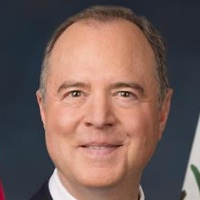
Adam Schiff
Senator
CA
The AI Ads Act amends the Federal Election Campaign Act to explicitly prohibit the use of AI-generated content in fraudulent campaign communications and solicitations. Furthermore, the bill broadens existing federal bans on fraudulent misrepresentation, making it illegal for any person—not just candidates or their agents—to falsely claim to represent political figures or organizations for any purpose.
AI Ads Act Targets Digital Deception: New Rules Ban AI Impersonation in Political Campaigns and Fundraising
The AI Ads Act is stepping into the digital age to update the Federal Election Campaign Act of 1971, specifically targeting the use of artificial intelligence to trick voters. At its core, the bill makes it a federal violation to use AI-generated content to fraudulently misrepresent campaign authority or solicit donations. This means if someone uses a deepfake voice or an AI-generated video to pretend they are a candidate or a campaign staffer to get your vote or your credit card number, they are breaking the law under Section 2. The bill recognizes that technology has moved faster than our regulations, and it aims to close the gap before your social media feed becomes a minefield of high-tech forgeries.
Expanding the No-Fly Zone for Fraud
One of the biggest shifts in this bill is who it covers. Previously, federal law mostly focused on candidates or their direct employees pretending to be someone else to cause damage. Section 3 of this bill blows those doors wide open. Now, anyone—not just a rival candidate—can be penalized for fraudulent misrepresentation. It also removes the requirement that the lie has to be 'damaging' to be illegal; the act of the fraud itself is the violation. For example, if a random person creates a fake 'Committee for Better Schools' using AI tools to mimic a local official's voice and asks for donations, they are now squarely in the crosshairs of federal law, regardless of whether they are an official candidate or just a scammer in a basement.
Closing the Fundraising Loophole
The bill also gets serious about your wallet by tightening rules on fraudulent fundraising. It expands the ban on soliciting funds to include any 'fictitious' political committee. This is a direct response to the rise of 'scam PACs' that might use AI to sound like a legitimate organization you support. By amending 52 U.S.C. 30124, the legislation ensures that whether a scammer is pretending to be a real candidate or a completely made-up political group, the legal consequences remain the same. For a donor, this means the law is catching up to the reality that a fraudulent text message or AI-generated robocall is just as dangerous as a forged letter.
Real-World Accountability in a Digital World
By explicitly defining AI-generated content as a tool for campaign fraud, the bill provides law enforcement with a clearer roadmap for prosecution. For the average person, this doesn't change how you legally support a candidate, but it adds a layer of protection against the increasingly sophisticated 'deepfake' scams that can appear in your inbox or on your screen. While the bill is specific about what constitutes a violation, the real-world challenge will be the speed of enforcement. However, by removing the old restrictions on who can be held liable and what their motives must be, the bill shifts the focus from political infighting to a broader protection of the public from digital deception.