This bill provides a limited antitrust exemption for non-federal entities to collaborate on sharing information and coordinating actions specifically designed to mitigate significant national security risks posed by artificial intelligence.
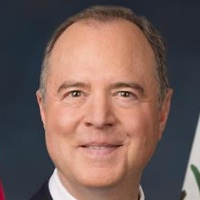
Adam Schiff
Senator
CA
The Collaboration on Adversarial Threats and Security Risks Act provides a limited antitrust exemption for non-federal entities to collaborate on identifying and mitigating significant national security risks posed by artificial intelligence. This legislation allows companies to share information and coordinate security measures—such as delaying deployments—provided these actions are taken in good faith to address specific, defined threats. The bill also empowers the Attorney General to seek injunctive relief if these collaborative actions violate antitrust laws or fail to effectively reduce security risks.
New AI Security Bill Grants Tech Giants Antitrust Immunity to Block 'Adversarial' Threats
The Collaboration on Adversarial Threats and Security Risks Act creates a legal 'safe zone' for tech companies to team up and share sensitive information—or even agree to stop developing certain technologies—if they believe an AI model poses a national security risk. Under Section 3, companies can bypass traditional antitrust laws to coordinate on delaying or limiting the release of AI software, provided they notify the Department of Justice first. The goal is to prevent advanced AI from being stolen by 'covered nations' or used to build chemical weapons and disrupt power grids (Section 2). While this sounds like a high-stakes spy thriller, the real-world impact hits closer to home: it essentially gives the biggest players in tech a hall pass to decide, behind closed doors, which AI tools are 'too dangerous' for the public to use.
The 'Safety' Shield
This bill allows two or more companies to share software, data, and personnel to investigate or mitigate security risks without fear of being sued for collusion. For example, if a group of developers notices a vulnerability that could let a foreign entity hijack a hospital’s infrastructure, they can legally coordinate a 'blackout' of that feature. However, Section 3(b) requires these companies to have strict internal controls to ensure this shared info isn't used for anything else—like poaching talent or snooping on a rival’s trade secrets. If a company gets sued for anti-competitive behavior, they can use this law as an 'affirmative defense' (Section 3(c)), meaning they won't be held liable if they can prove they acted in good faith for security purposes.
Competition in the Slow Lane
While the bill specifically forbids price-fixing or market allocation (Section 3(d)), the broad definition of a 'security risk' creates a gray area. If you’re a software engineer at a small startup, you might find your product’s rollout stalled because larger competitors flagged your tech as a potential risk to 'critical infrastructure.' Because the notices sent to the Justice Department are exempt from FOIA requests (Section 3(e)), the public—and smaller competitors—might never know exactly why certain AI advancements are being held back. This could lead to a 'big tech' bottleneck where only the companies with enough lawyers to navigate these DOJ notifications get to set the pace of innovation.
Guardrails and Red Tape
The government isn't totally hands-off. Section 4 gives the Attorney General the power to step in and stop these collaborations if they actually make security worse or if the companies can’t prove their 'good faith' intent. For the average person, this bill is a trade-off: it aims to keep dangerous AI out of the hands of bad actors, but it does so by letting the industry’s biggest rivals act as a unified gatekeeper. Whether this results in a safer digital world or just higher costs and fewer choices for AI-powered tools depends entirely on how strictly the Department of Justice polices these new 'security' partnerships.