The Closing Bribery Loopholes Act expands the federal definition of an "official act" to ensure that all duties, decisions, and actions—including pardons and commutations—are fully covered under anti-bribery and illegal gratuity laws.
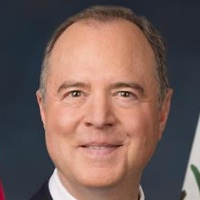
Adam Schiff
Senator
CA
The Closing Bribery Loopholes Act expands the legal definition of an "official act" to ensure federal bribery and illegal gratuity laws cover a broader range of official duties and positions of trust. This legislation explicitly includes actions such as pardons and commutations, clarifying that any decision or course of conduct within an official's capacity is subject to anti-corruption oversight.
Closing Bribery Loopholes Act Expands 'Official Act' Definition to Include Pardons and Recommendations
The Closing Bribery Loopholes Act seeks to tighten the screws on federal corruption by broadening 18 U.S.C. § 201(a)(3), the legal definition of an "official act." Under current law, what qualifies as an official duty can sometimes be a gray area, making it difficult to prosecute cases where favors are traded for influence. This bill clarifies that an official act includes any decision, recommendation, or action on a matter pending before a public official, specifically adding high-level powers like pardons, commutations, and reprieves to the list of actions that cannot be sold.
Redefining the Job Description
In the real world, this change means that the legal definition of an official's job now covers the full "range of duty" rather than just a narrow set of formal votes or hearings. For example, if a federal official makes a formal recommendation to a regulatory agency to favor a specific contractor in exchange for a gift, that recommendation is now explicitly an "official act" under the law. The bill also clarifies that it doesn't matter if the official actually succeeds in getting the desired outcome; the mere act of using their position of trust to influence a proceeding—whether through a single phone call or a long-term course of conduct—is enough to trigger bribery or illegal gratuity statutes.
Closing the Pardon Loophole
One of the most significant additions is the specific inclusion of executive clemency. By listing pardons, commutations, and reprieves as official acts, the bill ensures that these unique powers are subject to the same anti-corruption standards as any other government function. This means that if a president or high-ranking official were to offer a pardon in exchange for something of value, it would fall squarely within the federal bribery framework. For the average citizen, this provision serves as a safeguard, ensuring that the legal system's ultimate "reset button"—the pardon—cannot be legally treated as a commodity for sale.