This bill establishes a framework for FERC to approve cost-allocation tariffs for major interstate and offshore transmission projects based on their anticipated regional benefits.
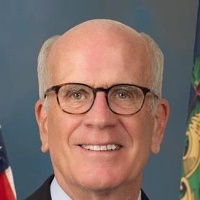
Peter Welch
Senator
VT
The Enhancing Electric Grid Resilience Act streamlines the development of major interstate and offshore transmission projects by establishing a clear framework for cost allocation. It empowers the Federal Energy Regulatory Commission (FERC) to ensure that costs for these significant facilities are distributed proportionally among beneficiaries based on a broad range of reliability, economic, and environmental factors.
New Power Grid Bill Clears Path for Massive Interstate Power Lines with New Cost-Sharing Rules
The Enhancing Electric Grid Resilience Act aims to jumpstart the construction of massive, high-capacity power lines by changing how we pay for them. Specifically, it targets 'transmission facilities of national significance'—think giant interstate or offshore power lines capable of moving at least 1,000 megawatts of electricity. To get these multi-billion dollar projects off the ground, the bill allows developers to file a plan with the Federal Energy Regulatory Commission (FERC) that spreads the construction costs across entire regions. Instead of one local utility footing the bill for a line that helps three other states, the costs will be divided among the customers who actually benefit from the upgrade.
Dividing the Electric Bill
Under Section 2 of the bill, FERC is required to ensure that cost allocation is 'roughly proportional' to the estimated benefits. This sounds fair in theory, but it’s a departure from simpler accounting. The bill mandates that FERC look at a 'broad range' of perks when deciding who pays, including things like grid reliability, economic gains, and environmental benefits. For a software developer working from home or a local shop owner, this could mean seeing a new line item or a slight adjustment on a monthly utility bill to fund a massive project hundreds of miles away. The trade-off is supposed to be a more stable grid that doesn’t flicker during a heatwave, but the 'roughly proportional' standard leaves a lot of room for interpretation on exactly how much of that stability you’re personally responsible for buying.
The National Significance Standard
The bill specifically defines which projects get this special cost-sharing treatment. A project qualifies if it is a new line with at least 1,000 megawatts of capacity or an upgrade that adds 500 megawatts to an existing line. For context, 1,000 megawatts is roughly enough to power 750,000 homes. By focusing on these 'national significance' projects, the legislation is betting big on long-distance infrastructure. While this could make it easier to connect windy plains or sunny deserts to the cities that need the power, it also means that regional customers might find themselves paying for infrastructure designed to meet federal public policy goals or environmental targets rather than just their local power needs.
Benefits vs. Bottom Lines
The real-world impact hinges on how FERC defines 'reasonably expected benefits.' Because the bill includes 'environmental' and 'resilience' benefits in the calculation, the math gets complicated. For a construction worker or a small business owner, the benefit might be a more resilient grid that prevents costly power outages. However, because these terms are broad, there is a risk that costs could be shifted onto consumers based on theoretical future benefits that are hard to measure today. The bill doesn't change FERC's power over smaller, local projects, but for the big stuff, it creates a new playbook that prioritizes getting the lines built by spreading the financial weight across a wider map.