The Advanced Coursework Equity Act provides federal grants to states and school districts to expand access to advanced academic programs and promote equitable enrollment for historically underrepresented students.
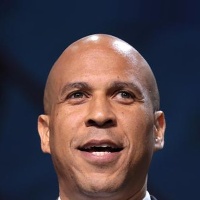
Cory Booker
Senator
NJ
The Advanced Coursework Equity Act aims to close the opportunity gap by expanding access to rigorous academic programs for historically underrepresented students. The bill establishes a federal grant program to help schools implement universal screening and open enrollment policies, ensuring that all students ready for advanced coursework have the chance to succeed. By providing resources for teacher training, tutoring, and program expansion, the Act seeks to prepare more students for success in STEM fields and the global workforce.
Advanced Coursework Equity Act Proposes $798 Million to Open Doors to High-Level Classes and STEM Programs by 2027
Right now, getting into an Advanced Placement (AP) class or a gifted program often depends more on who you know or which zip code you live in than how hard you're willing to work. This bill aims to change that by authorizing $266 million annually from 2027 to 2029 to help schools expand access to rigorous coursework. The core of the plan is to move away from "gatekeeper" systems—like subjective teacher recommendations—and toward "universal screening" or "open enrollment." Under universal screening (Section 4), every student in a grade is tested using at least two objective measures, and if they qualify, they are automatically enrolled unless a parent opts them out. This shifts the burden from the student having to prove they belong to the school ensuring they don't miss talent.
Breaking Down the Barriers
To make this happen, the bill funnels 80% of the money to state agencies, which then must give at least 65% of their subgrants to high-poverty districts or schools that currently offer fewer advanced courses than the state average (Section 6). For a parent in a lower-income neighborhood, this could mean their child’s school finally offers 8th-grade Algebra 1—a critical stepping stone for high school math—or dual-enrollment programs that let students earn college credit for free while still in high school. The bill also specifically targets the "STEM gap," providing funds to train teachers and counselors on how to recruit and support students from groups that have historically been left out of tech and engineering tracks.
Accountability and the "Bonus" System
This isn't just a blank check; the bill requires states and districts to set ambitious three-year goals for closing enrollment gaps (Section 5). To keep things honest, schools have to report detailed data on who is actually in these classes, broken down by race, disability status, and family income. There’s even a financial incentive: a 5% "bonus grant" for the states and districts that make the most progress toward their equity goals (Section 8). For teachers and school staff, this could mean more resources for tutoring and professional development, while for students, it means that if they have the drive, the door to the most challenging classes is actually unlocked.
Practical Hurdles and Real-World Impact
While the bill is a massive push for fairness, the "medium" level of vagueness in how different assessments are combined for universal screening means implementation will vary. A student who is a brilliant coder but struggles with standardized tests might still face hurdles if a district relies on traditional testing metrics. However, the bill does allow for "portfolios of work" and "class ranking" as objective measures (Section 4), giving schools some flexibility to find talent in different ways. For a busy family, the most immediate change might be the communication requirement: schools must explain these opportunities in multiple languages and formats, ensuring that "the fine print" of college prep isn't a secret kept from the parents who need it most.