The Medicaid RAC Improvement Act of 2026 enhances federal oversight, mandates the inclusion of managed care plans in audit programs, and establishes uniform standards to strengthen payment integrity and recovery efforts across state Medicaid systems.
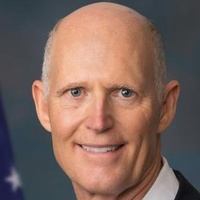
Rick Scott
Senator
FL
The Medicaid RAC Improvement Act of 2026 strengthens federal oversight and transparency of state Medicaid Recovery Audit Contractor (RAC) programs. The bill mandates the inclusion of managed care plans in audit efforts, establishes a uniform four-year look-back period for payment reviews, and requires annual reporting to Congress on program effectiveness. Additionally, it directs the Secretary of Health and Human Services to study barriers to program participation and launch a demonstration project to improve state audit outcomes.
Medicaid RAC Improvement Act of 2026 Sets 4-Year Audit Window and Expands Managed Care Oversight
The Medicaid RAC Improvement Act of 2026 is essentially a high-tech audit for one of the country's largest healthcare programs. It tightens the screws on how states track down overpayments—money that was paid out incorrectly to doctors or hospitals—and ensures that managed care plans, which cover a huge chunk of Medicaid patients, are no longer flying under the radar. By January 1, 2028, states must prove they have a system to audit these managed care contracts, either by letting the state’s Recovery Audit Contractors (RACs) in or by doing a rigorous self-check. Think of it like a corporate expense report: for years, some departments had to show every receipt, while others were on the honor system. This bill aims to make sure everyone is playing by the same rules to keep the program’s budget from leaking.
Expanding the Audit Net
For most people, Medicaid is a lifeline, but the plumbing behind it is incredibly complex. Currently, many states have "exceptions" that let them skip certain audit requirements, but this bill puts a hard stop on those free passes by 2029 (Sec. 2). It also brings Managed Care Organizations (MCOs) into the fold. If you’re a healthcare provider working with an MCO, heads up: the bill requires these plans to either perform their own "payment integrity reviews" or let state contractors do it for them (Sec. 3). This means that if a billing error happened three years ago, it’s much more likely to be flagged now. The goal is to recover "substantial portions" of overpayments, though the bill doesn't strictly define what "substantial" means, which might leave some wiggle room for interpretation depending on the state.
The Four-Year Look-Back
One of the biggest changes for the people running clinics or billing offices is the new uniform "look-back" period. Starting 120 days after this becomes law, all audit contracts must allow for a review of the current fiscal year plus the four previous years (Sec. 4). Imagine you’re a physical therapist who accidentally double-billed for a session in 2024; under this rule, an auditor could still come knocking in 2028 to recoup that cash. This creates a standard timeline across the board, replacing the patchwork of different rules that currently exists from state to state. It’s designed to give the government a long enough memory to catch mistakes without keeping providers in legal limbo forever.
Measuring Success and Removing Hurdles
To make sure this isn't just more paperwork for the sake of paperwork, the bill mandates a deep dive into why some states struggle to run these audit programs. The Secretary of Health and Human Services has to study things like whether the "contingency fees" paid to auditors—basically a commission on what they find—are actually working or if they’re scaring away smaller states (Sec. 4). There’s also a five-year pilot program coming to help more states get these systems off the ground. For the average taxpayer, this is about efficiency. If the government can recover billions in improper payments through better reporting and smarter audits, that’s money that stays in the system to actually provide care rather than getting lost in a bureaucratic paper trail.