This Act restricts U.S. nonmilitary foreign assistance to organizations and governments that promote abortion, gender ideology, or discriminatory equity ideology.
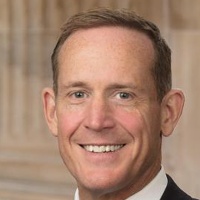
Ted Budd
Senator
NC
This Act restricts U.S. nonmilitary foreign assistance from supporting organizations that promote abortion, gender ideology, or discriminatory equity ideology. It places specific requirements on foreign and domestic organizations receiving these funds to ensure separation from prohibited activities. The bill also includes narrow exceptions for life-saving medical situations and allows the Secretary of State to waive provisions for national security interests.
Promoting Human Flourishing Act Redefines U.S. Foreign Aid Rules for Abortion, Gender, and DEI Programs
The Promoting Human Flourishing in Foreign Assistance Act introduces a strict set of ideological and operational requirements for any organization receiving U.S. nonmilitary foreign aid. Under this bill, foreign non-governmental organizations (NGOs) and international bodies would be barred from providing or promoting abortions, gender-affirming care, or specific diversity, equity, and inclusion (DEI) concepts outside the United States. For U.S.-based NGOs, the rules are slightly different but equally impactful: they must physically and financially wall off their federally funded projects from any activities the bill defines as 'promoting' these issues. This effectively forces organizations to run two separate operations if they wish to continue both their traditional advocacy and their U.S.-funded humanitarian work.
The Red Line on Reproductive and Gender Care
The bill establishes a rigid framework for healthcare and social services provided abroad. Section 3 prohibits the use of funds for abortion services or counseling, with very narrow exceptions only for life-threatening physical illnesses or ectopic pregnancies. Similarly, Section 4 targets 'gender ideology,' which the bill defines as any concept that treats gender as separate from biological sex. This means an NGO operating a health clinic in a developing country could lose its U.S. funding if it provides counseling on social transitions or uses pronouns that don't match a person's biological sex. For a doctor on the ground, this could mean the difference between providing comprehensive care and having to withhold information to keep the lights on.
Redefining Equity and Inclusion
In Section 5, the legislation takes aim at 'discriminatory equity ideology.' It defines this as any teaching that suggests individuals are part of privileged or oppressed groups based on race or sex, or that meritocracy is a biased concept. Foreign organizations receiving U.S. aid would be prohibited from using these frameworks in their training or operations. For a local business owner in a conflict zone participating in a U.S.-funded leadership program, this could mean that the curriculum must avoid discussing systemic barriers or historical context regarding race and gender, focusing instead strictly on individual agency as defined by the bill.
Practical Hurdles and the Power of the Pen
One of the biggest challenges for organizations will be the 'physical and financial separation' requirement. This isn't just about different bank accounts; it often means separate office space, staff, and equipment (Section 3 & 4). For a small nonprofit, this overhead could be a dealbreaker, potentially forcing them to drop U.S. partnerships entirely. Furthermore, the bill is written with a high level of vagueness regarding what 'promoting' an ideology actually looks like in practice. While the Secretary of State has the power to waive these rules for national security reasons (Section 6), the default setting is a total shift in how America projects its values and provides aid, moving away from integrated social programs toward a more restricted, biology-centered approach to foreign assistance.