This bill establishes a federal right to record, observe, or peacefully protest law enforcement activities and creates civil remedies, including monetary damages, for violations of this right.
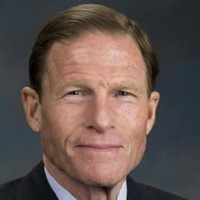
Richard Blumenthal
Senator
CT
This bill, the "Right to Record Act of 2026," establishes a federal right to record, observe, or peacefully protest law enforcement activities in public view. It creates a civil remedy allowing individuals to sue federal officers and the United States for violations, including penalties like statutory damages. The Act explicitly states that merely recording or standing near an officer does not forfeit this right unless physical restraint occurs.
Right to Record Act of 2026: New Law Grants $25,000 Minimum Payout for Interference with Filming Federal Police
The Right to Record Act of 2026 aims to turn your First Amendment right to film the police from a theoretical concept into a legally protected action with teeth. Under this bill, if a federal law enforcement officer—think FBI, TSA, or Border Patrol—tries to stop you from recording, observing, or peacefully protesting their activities in public, you can sue both the officer and the U.S. government. The bill explicitly states that the government waives its 'sovereign immunity,' meaning they can’t use the usual legal shields to block your lawsuit. If you win, the court is required to award you at least $25,000 in statutory damages, plus your attorney’s fees. If the officer acted with malice, that payout can jump by an additional $100,000 in punitive damages.
Clear Lines in the Sand
One of the biggest headaches in police-citizen interactions is the 'gray zone' of what counts as obstruction. This bill clears that up by stating you only lose your right to record if you 'physically restrict or restrain' an officer. Crucially, Section 3 clarifies that simply standing near an officer, being in their expected path, or recording them does not count as physical restriction. For example, if you are a commuter filming a TSA interaction at an airport or a bystander recording a federal arrest on a public sidewalk, an officer cannot legally order you to stop or seize your phone just because you are close to the action. The bill defines 'public view' broadly, covering any place you aren't trespassing, including parks, roads, and even private property where you are lawfully present.
Accountability for Retaliation
The legislation lists specific 'no-go' behaviors for federal agents that would trigger a lawsuit. These include threatening you with negative consequences, adding your biometric data to a database because you filmed them, or pursuing you to a different location to intimidate you. It also bans 'retaliatory surveillance,' where an officer might use their tech powers to identify you just because you were watching them work. If an agent tickets, arrests, or even just harasses you for exercising these rights, they are opening themselves up to personal liability. For a small business owner recording a federal inspection or a student at a protest, this means the 'stop filming or else' threat carries a heavy financial price tag for the officer and the agency.
Training and Implementation
To make sure these rules don't just sit in a dusty law book, the bill requires the head of every federal law enforcement agency to provide annual training for their officers. This training must specifically cover how to do their jobs while respecting your right to record and protest. While this adds a new layer of administrative work and potential litigation costs for agencies, the goal is to create a culture of transparency. For the average person, this means that the next time you pull out a smartphone to document a federal law enforcement encounter, the officer on the other side of the lens has a very clear, $25,000 reason to let you keep recording.