This Act imposes reasonable contribution limits on Super PACs to reduce the risk and appearance of corruption in federal elections.
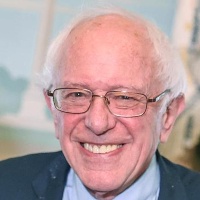
Bernard "Bernie" Sanders
Senator
VT
This Act aims to restore public trust in elections by imposing reasonable contribution limits on Super PACs. It finds that uncapped contributions create a significant risk and appearance of corruption between donors and candidates. By extending existing contribution limits to independent expenditure committees, the bill seeks to curb the influence of massive, unregulated political spending.
Abolish Super PACs Act Sets New Per-Person Donation Limits to Curb Big Money in Elections
Since 2010, the landscape of American elections has been dominated by 'Super PACs'—groups that can take in unlimited amounts of cash from a single person or company and spend it to influence your vote. The Abolish Super PACs Act aims to pull the plug on these uncapped donations. By amending the Federal Election Campaign Act (52 U.S.C. 30116(a)(1)(C)), the bill would force these 'independent expenditure committees' to play by the same rules as regular political action committees. This means that instead of writing a $100 million check, a billionaire would be limited to the same per-person contribution cap that applies to any other standard political committee.
Capping the Mega-Donors
The bill specifically targets the explosive growth of independent spending, which jumped from roughly $338 million in 2008 to a staggering $4.48 billion in 2024. Under Section 3, any group that spends more than $5,000 a year on independent political ads or gives that much to other similar groups is officially labeled an 'independent expenditure committee.' Once that label sticks, the 'unlimited' part of their bank account disappears. For the average person working a 9-to-5 or running a local shop, this change levels the playing field. It moves the needle away from a system where, in 2024, less than one percent of donors provided nearly 97 percent of all individual Super PAC money, ensuring that a handful of ultra-wealthy individuals can't drown out the voices of millions of regular citizens.
Closing the Influence Loophole
While the bill doesn't stop groups from spending money on ads, it restricts how they get that money in the first place. The legislation points out that even though these groups are technically 'independent' from candidates, the lack of limits creates a massive risk for 'quid pro quo' deals—basically, political favors in exchange for massive donations. By citing recent bribery cases like US v. Menendez, the bill argues that current laws aren't enough to stop the appearance of corruption that makes many voters feel like the system is rigged. If you're a small business owner or a trade worker, this means the person winning your local federal election might be less beholden to a single massive donor and more focused on the actual constituents who put them there.
What Happens Next?
If this bill becomes law, the new rules won't kick in overnight. According to the 'Effective Date' provision, the limits would apply starting in the first full calendar year after the bill is enacted. This gives the Federal Election Commission (FEC) time to update their systems and gives existing committees a chance to adjust their fundraising strategies. While this is a major shift for political consultants and the ultra-wealthy who have grown used to the post-2010 'wild west' of campaign finance, for the rest of us, it’s a move toward an election cycle that relies more on broad support and less on a few deep pockets.