This Act establishes federal requirements for scientific integrity policies, officers, and training within agencies that fund, conduct, or oversee scientific research to ensure policy decisions are based on unbiased science.
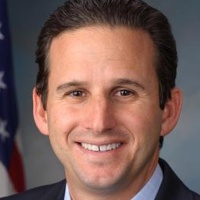
Brian Schatz
Senator
HI
The Scientific Integrity Act aims to safeguard the role of science in federal policymaking by requiring agencies that fund or conduct research to adopt and enforce strict scientific integrity policies. These policies must prohibit political interference, data suppression, and retaliation against scientists. The legislation establishes Scientific Integrity Officers within agencies and mandates regular training and public reporting on policy implementation to ensure public trust in government science.
New Scientific Integrity Act Mandates Agencies Protect Science from Political Meddling
Alright, let's talk about something that might sound a bit wonky but actually hits pretty close to home: the Scientific Integrity Act. This isn't just about scientists in lab coats; it's about making sure the information our government uses to make big decisions—think public health, environmental regulations, even national security—is solid, unbiased science, not swayed by politics or other agendas.
The 'No Funny Business' Policy for Government Science
At its core, this bill, officially titled the Scientific Integrity Act, is trying to put up some serious guardrails around how federal agencies handle scientific research. Congress basically said, 'Look, we need to trust the science, and that means keeping it free from political influence, ideology, or financial conflicts of interest.' So, what does that mean in practice? Well, within 90 days of this thing becoming law, every federal agency that funds, conducts, or oversees scientific research has to adopt a scientific integrity policy. These aren't just suggestions; they're rules that need to be approved by the Office of Science and Technology Policy (OSTP) and then made public.
These policies are designed to be pretty comprehensive. They'll prohibit federal employees and contractors involved in scientific work from things like suppressing, altering, or delaying scientific findings without a real scientific reason. Think about it: no more burying research results because they're inconvenient. It also bans intimidating or retaliating against someone trying to share their findings. On the flip side, these policies will allow scientists to do their jobs without fear—disseminating their findings, participating in conferences, publishing in peer-reviewed journals, and engaging with the broader scientific community. It's about letting the science speak for itself.
Your Tax Dollars, Their Expertise
One of the key things this bill emphasizes is that scientific conclusions shouldn't be based on political considerations. That means when agencies hire for science and technology positions, it should be based on expertise, credentials, and integrity, not who you know or what your political leanings are. This also extends to personnel actions, ensuring that folks aren't getting promoted or sidelined based on ideology. For everyday people, this is a big deal because it means the experts guiding decisions about, say, the safety of a new drug or the impact of pollution in your town, are chosen for their scientific chops, not their political alignment.
The Watchdogs and the Whistleblowers
To make sure these policies actually have teeth, each agency will have to appoint a Scientific Integrity Officer. This isn't some political appointee; it's a career employee with real scientific expertise. Their job is to direct these integrity activities, work with the agency's inspector general, and generally be the go-to person for keeping things on the straight and narrow. Agencies also have to set up administrative processes and appeal systems for disputes, and they'll be providing regular training on scientific integrity and ethics.
And for those who might see something fishy? The bill includes whistleblower protections. This means if you're a federal employee or contractor and you see scientific findings being suppressed or altered, you'll have a process to report it without fear of retaliation. Each Scientific Integrity Officer will also have to post an annual report online, detailing complaints, appeals, and their outcomes, all anonymized, of course. If an agency head tries to overrule a Scientific Integrity Officer's decision outside the established channels, that incident has to be reported to the OSTP and Congress within 30 days. This level of transparency is a big step towards accountability.
What This Means for You
So, why should you care? Because ultimately, this bill is about making sure that the government's decisions, which affect everything from the air you breathe to the food you eat, are based on the best available scientific evidence, not political whims. For a small business owner, this could mean more stable and predictable regulations based on objective data. For a parent, it could mean greater trust in public health advisories. For anyone, it means that the science funded by your tax dollars is more likely to be accurate and openly communicated. While some of the language can be a bit broad, like 'highest ethical and professional standards,' the intent is clearly to create a system where scientific integrity is the rule, not the exception. It's a move to ensure that when the government talks about science, you can actually believe what they're saying.