This bill establishes stricter penalties and legal presumptions for foreign nationals from designated countries who photograph or record sensitive U.S. military assets and installations.
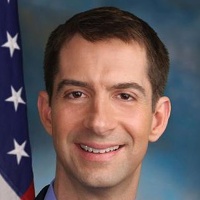
Tom Cotton
Senator
AR
This Act strengthens federal espionage laws to deter foreign surveillance of critical U.S. military capabilities. It establishes stricter penalties and a legal presumption of intent to harm for foreign nationals from designated countries who photograph or record high-value military assets or installations. The legislation also mandates the public identification of these strategic locations and modernizes prohibited activities to include AI-enhanced visual depictions.
New Bill Targets Foreign Nationals Near Military Sites: Stricter Rules, Deportation Risks
Alright, let's talk about something that could seriously change how certain foreign nationals are treated near military installations. This new piece of legislation, dubbed the 'Visual Protection of Strategic Assets Act,' is looking to crack down hard on anyone, particularly citizens from specific countries, who might be caught photographing or recording sensitive military sites and equipment.
The New Rules of Engagement: What's Changing?
So, what's the big deal? This bill is essentially updating our federal espionage laws. It's making it a lot tougher for what it calls 'covered persons'—citizens or nationals from North Korea, China, Russia, and Iran—if they're caught taking pictures, videos, or even using AI to enhance visual depictions of certain military assets or bases. We're talking about things like the Boeing E4B Nightwatch aircraft, the Northrop B2 Spirit, and any nuclear command platform. These are now officially 'high-value assets.' Military bases critical to national strategic missions are now 'tier-1 installations.' The Secretary of Defense will keep a public list of these, updated yearly, and they'll be clearly marked with 'no photography' signs.
Here’s where it gets really interesting, and potentially tricky: if you're a citizen from one of those 'countries of concern' and you're caught doing this, the bill creates a legal presumption that you did it to harm the U.S. or benefit your home country. Think about that for a second. You'd then have to prove, with 'clear and convincing evidence,' that you had prior approval from the Secretary of Defense to be there and do what you were doing. That's a pretty high bar to clear, even if your intentions were totally innocent.
Bigger Sticks and Harder Landings
Beyond that legal presumption, the penalties are getting a serious upgrade. If you're generally caught violating this, you could face a fine and up to a year in prison. But if it involves one of those 'high-value assets' or 'tier-1 installations,' that jumps to up to seven years. And if you're from a 'country of concern,' you're looking at a fine and between five and ten years in prison. Ouch.
But wait, there's more. Anyone convicted would also have to forfeit any electronic device used in the crime—your phone, your camera, whatever—straight to the U.S. government. And on top of that, a civil penalty of up to $100,000. For foreign nationals from those 'countries of concern,' a conviction means your visa gets revoked, and you're immediately put into deportation proceedings. This isn't just a slap on the wrist; it's a full-on eviction notice.
Who Feels the Heat?
So, who does this really hit? Obviously, citizens and nationals from North Korea, China, Russia, and Iran who are visiting or residing in the U.S. are squarely in the crosshairs. If you're from one of these countries and you happen to be near a military base, even as a tourist, snapping a picture could land you in serious hot water. It also raises questions for journalists or researchers who might be trying to document military activities, as the expanded prohibitions now include video recording and AI-enhanced visual depictions. The bill gives a lot of power to the Secretary of Defense to define what counts as 'high-value' or 'tier-1,' and how those lists are updated, which means the scope of this could change over time.
This bill is a clear move to tighten national security around our most sensitive military sites. But it also introduces some pretty significant changes, especially with that legal presumption and the targeted penalties based on nationality. It's definitely one to watch if you're a foreign national in the U.S. or someone whose work might bring them near these installations.