The Energy Security Pacts Act establishes a State Department office and interagency council to negotiate and implement multiyear agreements with partner countries aimed at strengthening energy security and diversifying critical mineral supply chains.
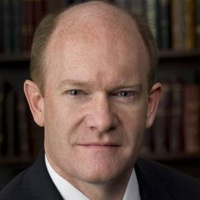
Christopher Coons
Senator
DE
The Energy Security Pacts Act establishes a framework for the U.S. Department of State to enter into multiyear agreements with partner countries to strengthen energy and economic security. By creating a dedicated Office of Energy Security Pacts and an interagency Council, the bill aims to diversify critical mineral and energy supply chains while fostering private-sector investment. These pacts are designed to enhance global energy reliability and competitiveness through transparent, strategic, and collaborative international partnerships.
Energy Security Pacts Act to Launch 10-Year Global Deals: Securing Critical Minerals and Energy Supply Chains
The Energy Security Pacts Act aims to shore up the United States’ access to the raw materials that power modern life—everything from the lithium in your smartphone to the minerals in electric vehicle batteries. By authorizing the Secretary of State to sign multiyear 'Energy Security Pacts' with partner countries, the bill seeks to build a more reliable supply chain that isn't dependent on 'countries of concern.' These pacts are designed to last up to 10 years, focusing on building infrastructure, increasing energy production, and ensuring that the U.S. and its partners aren't left vulnerable to economic pressure from global rivals.
The Global Supply Chain Playbook
To get these deals moving, the bill creates a new Office of Energy Security Pacts and a high-level Council chaired by the Secretary of State. This isn't just a diplomatic handshake; it’s a financial and technical commitment. The Director of this new office can pull funds from various pots—like the Export-Import Bank or the Millennium Challenge Corporation—to help partner countries build the mines, processing plants, and power grids needed to get critical minerals to market. For a tech worker in Austin or a mechanic in Ohio, this is about trying to stabilize the costs and availability of the high-tech goods we use every day. However, the bill is clear that this money can't be used for military training or projects that would cause a 'substantial loss' of U.S. jobs, though it doesn't strictly define what 'substantial' means (Sec. 3).
Who Gets a Seat at the Table?
Not every country can sign up. To be eligible, a country generally has to be lower-to-middle income (per World Bank standards) and be deemed 'strategically or commercially important' by the President or Secretary of State (Sec. 5). This gives the government a lot of leeway to pick partners. While this flexibility helps the U.S. move fast, it also means the selection process could be influenced by shifting political winds. Each pact must include a 'constraints analysis'—basically a deep dive into what’s holding that country’s energy sector back—and set specific benchmarks to prove the money is being spent well. For the American taxpayer, this means there are built-in report cards, but the actual success depends on how strictly the State Department holds these foreign partners to their word.
Guardrails and Red Tape
Because large sums of money and international mining are involved, the bill includes some specific 'no-go' zones. For instance, it explicitly bans any financial assistance to companies where senior U.S. government officials or their families have an ownership stake (Sec. 3). It also requires that all contracts for goods and services under these pacts be awarded through fair and transparent bidding. One potential hurdle is the complexity of the setup: with a new office, a new council, and the ability to shuffle money between multiple agencies, there’s a risk of bureaucratic overlap. The Government Accountability Office (GAO) will be watching, with a requirement to report to Congress every year on whether these projects are actually delivering the development impact they promised.