This act establishes the Federal Prosecutorial Accountability Act, allowing individuals to sue federal prosecutors for misconduct and imposing temporary representation bans for sanctioned attorneys.
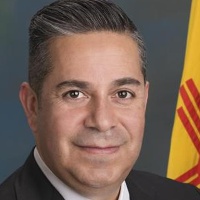
Ben Luján
Senator
NM
The Federal Prosecutorial Accountability Act establishes a private right of action allowing individuals to sue federal prosecutors for misconduct, including violations of constitutional rights or procedural rules. Successful plaintiffs can recover compensatory and punitive damages, with the U.S. government held jointly liable. The bill also mandates a one-year prohibition from government representation for any attorney sanctioned under Rule 11.
New Bill Lets You Sue Federal Prosecutors for Misconduct, Caps Damages at $1M
Ever felt like the legal system, especially federal prosecutors, operates in its own untouchable bubble? Well, a new piece of legislation, dubbed the Federal Prosecutorial Accountability Act, aims to poke a hole in that bubble. This bill creates a direct path for individuals to sue federal prosecutors for misconduct, covering everything from violating constitutional rights to not following court rules. If a prosecutor is found liable, they'd be on the hook for damages and legal fees, with punitive damages capped at a cool $1 million per violation. The U.S. government would also be jointly responsible for paying out any judgments. But before you can head to court, you'd need to file a complaint with the Department of Justice’s Office of Professional Responsibility and wait for their decision, or for 180 days to pass.
Holding the Line: What This Means for Everyday Folks
At its core, this bill is about accountability. Imagine a scenario where a federal prosecutor oversteps, perhaps withholding crucial evidence that could prove someone's innocence, a violation of due process. Under current law, getting justice for such misconduct can be incredibly tough. This Act would give individuals a direct legal avenue. For example, if a small business owner faced a federal investigation and felt their rights were clearly violated by the prosecuting attorney—say, through an illegal search or seizure—they could potentially sue that prosecutor for damages. This moves the needle on who bears the cost of misconduct, shifting some of it from the individual to the responsible parties and, ultimately, the government.
The Fine Print: Navigating the New Rules
Now, it’s not a free-for-all. The bill is pretty clear that you can only sue for violations of “clearly established constitutional, statutory, or regulatory rights,” or breaches of specific legal rules like the Federal Rules of Criminal Procedure. This means it’s not for every grievance, but for actual, demonstrable misconduct. The requirement to first go through the Department of Justice’s internal review process is a significant step. While it aims to give the DOJ a chance to address issues internally, it also means a potential delay of up to six months before a lawsuit can even begin. For someone trying to get their life back on track after a legal ordeal, that can feel like an eternity. Plus, the bill makes the U.S. government jointly responsible for any judgments, meaning taxpayers could ultimately foot the bill for prosecutorial missteps.
Sanctions and Side Effects: The Rule 11 Impact
There’s another interesting wrinkle in this bill: it amends Section 530B(b) of title 28, United States Code. This part states that if a government attorney gets sanctioned by a court under Rule 11 of the Federal Rules of Civil Procedure—which is basically a judge saying an attorney filed something frivolous or without proper investigation—that attorney would be barred from representing the government in court for a full year. Think of it as a timeout for legal professionals who don't play by the rules. While it’s a direct consequence for attorneys who fall short, it also means the government might temporarily lose experienced legal talent, which could impact ongoing cases. This provision aims to ensure that those representing the government uphold the highest standards of legal practice, but it also raises questions about how this temporary ban might affect the continuity of justice for cases those attorneys are handling.