The GUARDRAILS Act repeals the December 2025 Executive Order on Artificial Intelligence and prohibits the use of federal funds for its implementation.
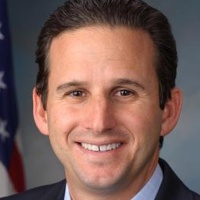
Brian Schatz
Senator
HI
The GUARDRAILS Act formally repeals the December 11, 2025, Executive Order concerning national policy frameworks for artificial intelligence. This legislation terminates the order's legal effect and prohibits the use of federal funds for its implementation, administration, or enforcement.
GUARDRAILS Act Repeals National AI Policy Framework: Federal Funding for AI Oversight Halted Immediately
The GUARDRAILS Act is a surgical piece of legislation designed to do one thing: hit the delete button on the federal government’s current game plan for Artificial Intelligence. Specifically, Section 2 of the bill repeals the Executive Order titled 'Ensuring a National Policy Framework for Artificial Intelligence' from December 2025. This isn’t just a symbolic gesture; the bill explicitly forbids any federal money from being spent to implement or enforce that framework. Essentially, it pulls the plug on the existing rules of the road for AI development and safety at the federal level.
Unplugging the Safety Net
By canceling the 2025 Executive Order, the bill effectively clears the deck of current AI regulations. For a software developer at a tech startup, this might feel like a breath of fresh air, removing bureaucratic hurdles or reporting requirements that were meant to ensure AI models weren't biased or dangerous. However, for a consumer concerned about how their data is used or whether an AI-driven loan application is fair, this repeal removes the specific protections and transparency requirements that the previous policy was designed to provide. Because Section 2 blocks all funding for these programs, any government office tasked with watching over AI safety would essentially have to stop their work immediately.
A Regulatory Clean Slate
This bill creates a 'blank slate' for how the U.S. handles one of the most transformative technologies of our time. On one hand, it prevents what some might see as executive overreach, shifting the power back to Congress to write permanent laws rather than relying on a President's order. On the other hand, it creates a temporary 'wild west' scenario. Without a replacement framework included in this bill, we are looking at a period where there are no clear federal standards for AI safety, ethics, or accountability. For a small business owner using new AI tools to manage inventory, this means less red tape today, but significantly more uncertainty tomorrow about what the future rules might be.
The Cost of the Reset
The immediate challenge of the GUARDRAILS Act is the lack of a transition plan. Since the bill prohibits spending federal funds to carry out the old order, ongoing safety audits or research projects into AI risks would likely be abandoned mid-stream. This could impact public interest groups who rely on federal standards to hold companies accountable. While the bill is short and clear in its intent to deregulate, the real-world impact is a sudden shift in oversight that leaves the public—and the industry—waiting to see what, if anything, will replace the guardrails that were just taken down.