The Student Loan Interest Elimination Act aims to reduce the cost of higher education by eliminating interest on federal student loans, restructuring borrowing programs, and establishing a trust fund to provide supplemental financial aid.
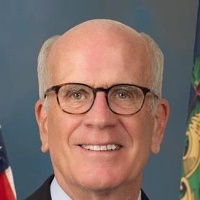
Peter Welch
Senator
VT
The Student Loan Interest Elimination Act aims to reduce the cost of higher education by eliminating interest on both existing and future federal student loans starting July 1, 2026. The legislation also establishes an Education Affordability Trust Fund to manage loan repayments and reinvest investment earnings into supplemental student aid and institutional grants. Additionally, the bill streamlines implementation by granting the Department of Education authority to expedite the rollout of these new policies.
Student Loan Interest Elimination Act Sets 0% Interest Rate and Expands Pell Grants Starting 2026.
The Student Loan Interest Elimination Act aims to fundamentally rewrite the math of higher education by setting the interest rate on federal student loans to 0% and redirecting loan repayments into a new investment fund designed to boost financial aid. Starting July 1, 2026, the bill would stop interest from accruing on existing Direct Loans and allow borrowers with older or private-held federal loans to refinance into interest-free government loans. For future students, the 'subsidized' vs. 'unsubsidized' distinction disappears because every new federal loan will carry a 0% rate, ensuring that a graduate who borrows $30,000 only ever owes exactly $30,000 back.
The End of the Interest Trap
Under this plan, the Department of Education would automatically pause interest on most current federal loans by mid-2026. If you are a nurse or a teacher working toward Public Service Loan Forgiveness (PSLF), the bill explicitly states in Title I that your progress stays intact even if you refinance to get that 0% rate. This change effectively ends the 'ballooning balance' phenomenon where borrowers make payments for years only to see their total debt increase due to compound interest. While the bill eliminates the subsidized loan program—where the government currently pays interest while you're in school—it compensates by raising the borrowing limits for unsubsidized loans and tying those limits to inflation starting in 2027 (Title II).
Investing in the Next Generation
Instead of interest payments disappearing into the general treasury, Title III creates the Education Affordability Trust Fund. Think of this as a massive savings account for the country’s education system; your monthly loan repayments are invested in safe bonds, and the profits are used to fund 'Supplemental Pell Grants.' This means a student from a low-income family could receive extra cash for tuition simply because the trust fund’s investments performed well. Additionally, colleges could compete for grants from this fund if they prove they are keeping tuition hikes in check, potentially slowing the rising cost of a degree for everyone.
Fast-Tracking the Rules
To get these changes moving, Title IV gives the Secretary of Education the power to skip 'negotiated rulemaking'—the usually mandatory period where the government has to sit down with student advocates and college reps to hash out the fine print. While this 'fast-track' authority means you might see relief on your statement sooner, it also means there is less public oversight on how these massive transitions are managed. For the millions of people currently juggling a mortgage, childcare, and a student loan payment that never seems to shrink, this bill represents a shift toward treating education as a public service rather than a high-interest financial product.