This bill expands and extends the rural decentralized water systems grant program to provide increased financial assistance for private well and septic system repairs in rural households.
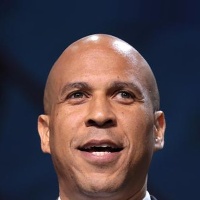
Cory Booker
Senator
NJ
This bill amends the Consolidated Farm and Rural Development Act to expand and extend the rural decentralized water systems grant program through 2031. It increases the maximum financial assistance available to low-income rural households for the construction or repair of private water wells and septic systems. Additionally, the legislation updates eligibility requirements and allows for extended warranty coverage on new septic installations.
Rural Water Grant Update Boosts Individual Well and Septic Funding to $20,000 Through 2031
This legislation updates the Consolidated Farm and Rural Development Act to expand financial support for homeowners in rural areas who rely on private water wells and septic systems. By extending the program’s authorization through 2031, the bill ensures that nonprofit organizations can continue distributing funds to help residents build, fix, or maintain these essential systems. The most immediate change is a bump in the maximum assistance amount: individuals can now receive up to $20,000 for their projects, a $5,000 increase from the previous limit. This adjustment acknowledges the rising costs of construction and specialized labor that rural homeowners face when their basic utilities fail.
Scaling Support by Income
The bill uses a specific tiered system to decide who gets a loan versus a subgrant, tied directly to the local median income of nonmetropolitan areas. If a household brings in less than 60 percent of that local median, they qualify for a subgrant—essentially a grant that doesn't need to be paid back. For those earning between 60 and 100 percent of the median, the assistance comes in the form of a loan. For example, a family in a rural county struggling with a failing septic tank could access these funds through a local nonprofit, with the specific terms of that help dictated by how their paycheck compares to their neighbors' average earnings.
Protection for Your Pipes
A new provision in the bill specifically targets the long-term reliability of septic systems by allowing subgrant funds to cover the cost of a performance warranty. Under this rule, a homeowner receiving a subgrant for a septic system can include enough extra funding to pay for a warranty that lasts at least five years. This is a practical addition designed to prevent a 'one-and-done' fix; if a new system fails shortly after installation, the warranty ensures the homeowner isn't immediately back in a financial hole. It shifts the focus from just getting a system installed to making sure it actually works over the long haul.
Infrastructure for the Long Game
By pushing the program’s expiration date out to 2031, the bill provides a decade of stability for the nonprofits that manage these projects and the contractors who perform the work. For a small-town contractor or a rural resident moving into an older home with an outdated well, this means the 'safety net' for water infrastructure is staying put. The bill clarifies that these funds are strictly for household systems in rural areas, maintaining a narrow focus on individual residential needs rather than large-scale municipal projects. It’s a direct attempt to bridge the gap for people who live outside the reach of city water lines and have to manage their own utility infrastructure.