The Corruption Clawback Act establishes a legal framework for the Department of Justice to recover government-funded settlements or judgments paid to a President that are deemed to have been improperly influenced by their office.
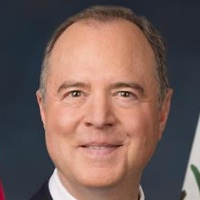
Adam Schiff
Senator
CA
The Corruption Clawback Act establishes a legal framework for the Department of Justice to recover government-funded settlements or judgments paid to a President if those payments were improperly influenced by their office. The bill mandates judicial review of such payments to ensure they are not inflated or based on conflicts of interest, with any recovered funds directed to the Department of Justice’s Public Integrity Section. Additionally, it requires the Comptroller General to report to Congress on any such payments exceeding $1 million.
Corruption Clawback Act Targets Presidential Payouts: New Lawsuits to Recover Taxpayer-Funded Settlements Starting 2025.
The Corruption Clawback Act is essentially a 'return to sender' policy for the U.S. Treasury. It creates a legal mechanism to reclaim money paid out to a President through settlements or court judgments if those payments were only granted because of the office they held. Starting January 20, 2025, any administrative claim or settlement involving the President that draws from the Judgment Fund—a permanent pot of taxpayer money used to pay claims against the government—is subject to a deep-dive review by the Department of Justice. If the Attorney General finds that a payment was essentially a 'sweetheart deal' rather than a standard legal payout, they are required by Section 3 to file a civil lawsuit to get that money back.
The 'Friend and Family' Filter
To figure out if a payment was legitimate or just a perk of the job, the bill gives judges a specific checklist in Section 3(b). For example, if you’re an office manager at a private firm, your legal settlements are usually handled by neutral HR reps or outside counsel. Under this bill, the court will look at whether the government officials who signed off on a President’s payout were hand-picked political appointees or former personal lawyers. It also flags red flags like payouts that are significantly higher than what a regular citizen would get for the same issue, or if the government’s lawyers conveniently 'forgot' to use standard legal defenses that would normally protect taxpayer money.
Where the Money Goes
If the government wins one of these 'clawback' lawsuits, the recovered cash doesn't just disappear back into a general fund. Section 3(c) mandates that the funds be handed over to the Public Integrity Section of the Department of Justice. Think of this as a self-funding loop for government accountability: money recovered from potential executive overreach goes directly into the pockets of the very unit responsible for prosecuting public corruption. This ensures that the resources are available to keep an eye on future transactions without needing to wait for a new budget cycle from Congress.
Keeping the Receipts
For the big-ticket items, the bill adds a layer of adult supervision. Section 4 requires the Comptroller General to write a detailed report to Congress within 180 days of any 'covered payment' that exceeds $1,000,000. This means if a massive settlement is reached, there is a mandatory paper trail explaining exactly how it happened and whether it met the bill's fairness criteria. While the bill’s language about whether a payment 'would not have been made' without the President’s status is a bit subjective, the reporting requirement ensures that these million-dollar decisions aren't happening behind closed doors without a public explanation.