This bill establishes a Business Child Care Liaison within the IRS to promote employer-provided child care benefits, assist businesses with tax incentives, and recommend policies to increase access to child care.
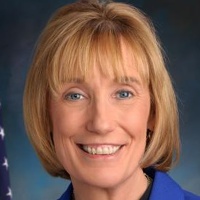
Margaret "Maggie" Hassan
Senator
NH
The Child Care Tax Benefit Outreach and Assistance Act establishes a dedicated Business Child Care Liaison within the IRS to promote and expand employer-provided child care benefits. This role will serve as a primary resource for businesses and tax professionals, helping to navigate tax incentives like the section 45F credit and Dependent Care FSAs. Additionally, the Liaison is tasked with coordinating federal outreach efforts and providing annual reports to Congress to identify strategies for increasing access to child care support.
IRS to Appoint Dedicated Child Care Liaison: New Initiative Aims to Help Small Businesses and Working Parents Navigate Tax Credits.
The Child Care Tax Benefit Outreach and Assistance Act is designed to bridge the gap between complex tax code and the actual child care needs of working families. By amending Section 7803 of the Internal Revenue Code, the bill mandates the appointment of a Business Child Care Liaison within the IRS. This isn't just another bureaucrat; this role is specifically tasked with acting as a direct line for businesses, state agencies, and advocates to figure out how to actually use federal incentives like the Section 45F credit and Dependent Care Flexible Spending Accounts (FSAs). For a small business owner who wants to help their staff with child care but is terrified of an IRS audit, this Liaison is meant to be the person who translates the jargon into a usable game plan.
Cutting Through the Red Tape
One of the biggest hurdles for an office manager or a shop owner isn't the desire to help their employees—it's the paperwork. The bill requires the new Liaison to create a 'fact sheet' specifically for tax preparers that outlines every available employer-provided child care benefit. It also calls for a dedicated resource link on SAM.gov within 120 days of the bill becoming law. This means if you're running a construction firm and want to offer backup care or stipends, you won't have to hire a high-priced consultant just to find the right forms. The goal is to make these benefits as common and easy to implement as a standard 404(k) plan.
Real-World Resources for the Daily Grind
The Liaison’s duties go beyond just hosting a website. They are required to coordinate with the Small Business Administration and the Department of Labor to reach out to employers who might not even know these tax breaks exist. For example, a tech startup founder might use this guidance to set up on-site care, while a local retail chain might use it to better manage subsidized care for their floor staff. By focusing on 'information barriers,' the bill acknowledges that a tax credit is useless if the people who need it most can't figure out how to claim it. The Liaison also gets a seat at the table when the IRS writes new regulations, ensuring that the 'real world' perspective of businesses is considered before the rules are finalized.
Accountability and the Fine Print
To make sure this isn't just a symbolic gesture, the bill requires an annual report to Congress every December 31st. This report must include hard data on how many employers are actually using these benefits, broken down by business size. This transparency is key for seeing if the tax credits are actually reaching small shops or just large corporations. One detail to watch: the Liaison position is exempt from standard federal hiring rules for competitive service. While this allows the IRS to hire a specialist quickly, it does bypass some of the usual transparency safeguards for federal jobs. However, with a salary set at Level V of the Executive Schedule and a direct mandate to report to the Senate Finance Committee, the role is positioned to have enough authority to actually move the needle on employer-sponsored care.