The Balanced Budget Responsibility Act of 2026 grants the President authority to withhold non-entitlement federal spending to eliminate projected fiscal deficits.
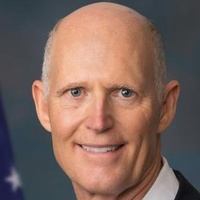
Rick Scott
Senator
FL
The Balanced Budget Responsibility Act of 2026 grants the President the authority to withhold non-protected federal spending if a fiscal year is projected to end in a deficit. This measure aims to eliminate projected deficits by allowing the executive branch to reduce expenditures across most federal programs, excluding Social Security and Medicare.
Balanced Budget Responsibility Act Grants President Unilateral Power to Slash Federal Spending Starting in 2026
The Balanced Budget Responsibility Act of 2026 is a massive shift in how your tax dollars are managed. In short, it gives the President the power to stop spending money that Congress has already approved. If the President, the Treasury, and the Office of Management and Budget decide the year will end in a deficit, they can simply 'withhold' funds to balance the books. While it sounds like a straightforward way to fix the national debt, it effectively hands the 'power of the purse'—a job the Constitution gives to Congress—over to the executive branch. This isn't just a minor tweak; it explicitly overrides the Impoundment Control Act of 1974, which was originally passed to stop presidents from ignoring Congressional spending plans.
The Protected and the Vulnerable
The bill creates a massive divide between what is safe and what is on the chopping block. Under Section 2, 'covered budgetary resources'—the funds the President can freeze—include almost everything except Social Security and Medicare. This means if you are a senior relying on those specific checks, your benefits are technically safe under this bill. However, for everyone else, the uncertainty is high. Because the bill is so vague about which programs get cut first, a President could theoretically stop funding for veteran services, national parks, or highway repairs overnight to hit a budget target. If you’re a contractor working on a federally funded bridge or a researcher relying on a grant, your livelihood could become a casualty of a sudden executive decision to erase a deficit.
A New Kind of Budgetary Wild West
The real-world impact here is the lack of a roadmap. Usually, budget cuts are debated in Congress, where there is at least some public record of what’s being sacrificed. This bill allows for unilateral decisions behind closed doors. For a small business owner relying on SBA loans or a family in a rural area waiting on broadband infrastructure, this creates a 'wait and see' environment. Since the President can withhold any amount 'not more than the amount needed to eliminate the projected deficit,' there are no rules on whether they cut 1% from everything or 100% from a few specific agencies. It turns federal funding into a moving target, making it incredibly difficult for local governments and private partners to plan more than a few months ahead.