This bill allows states to opt out of the federal law that permits out-of-state banks and credit unions to charge interest rates allowed by their home state.
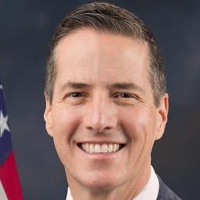
Bernie Moreno
Senator
OH
The American Lending Fairness Act of 2026 restores the authority of states to regulate the interest rates charged by their own state-chartered banks and credit unions. This is achieved by allowing states to opt out of the federal rule that permits out-of-state banks to charge the higher interest rates allowed in their home state. States can exercise this opt-out power through specific state legislation or voter approval.
American Lending Fairness Act of 2026 Ends National Interest Rate Loophole: States Gain Power to Opt Out by 2026.
The American Lending Fairness Act of 2026 hands the steering wheel back to state governments regarding the interest rates you pay on loans from out-of-state banks. Currently, thanks to a 1980 federal law, a bank chartered in a state with high or nonexistent interest rate caps (like Utah or Delaware) can often export those high rates to customers living in states with much stricter consumer protections. This bill repeals Section 525 of the Depository Institutions Deregulation and Monetary Control Act, giving your home state the explicit right to say 'no thanks' to those exported rates. To do this, a state must either pass a new law or have voters approve a ballot measure specifically stating they want to opt out of the federal rule for their own state-chartered institutions.
The End of the 'Rate Export' Shortcut For decades, the banking world has operated on a bit of a loophole: if a bank is based in State A, it can often charge State A’s interest rates to a borrower in State B, even if State B has a law forbidding rates that high. Under this new bill, if your state opts out, a bank from across the country would have to play by your local rules when lending to you. For a construction worker in a state with a 15% interest cap, this could mean the end of seeing 30% APR offers from out-of-state credit cards or personal loans in their mailbox. It effectively creates a 'my house, my rules' environment for state-level lending.
A Patchwork of Plastic While this move empowers local voters and legislators to crack down on predatory rates, it could create a logistical headache for people who move frequently or live near state lines. If you’re a software developer living in Vancouver, Washington, but working in Portland, Oregon, you might find that the loan options available to you change the moment you cross the bridge if one state has opted out and the other hasn't. Financial institutions will have to navigate a complex 'patchwork' of 50 different sets of rules, which could lead some smaller out-of-state banks to stop offering loans in certain states altogether to avoid the compliance costs.
Who Wins and Who Pays the Tab? The primary beneficiaries here are state governments and local consumers who want more aggressive protections against high-interest debt. By requiring a specific state law or a ballot measure (Section 2), the bill ensures that this isn't a quiet bureaucratic change, but a public choice. However, the flip side is a potential 'credit crunch.' If a state sets its interest caps too low and opts out of the federal standard, out-of-state lenders might decide it’s no longer profitable to lend there. For a small business owner relying on a specific out-of-state line of credit to manage inventory, this could mean fewer choices and a tougher time finding a loan if local banks can’t fill the gap.