This Act establishes the AI Grand Challenges Program, run by the NSF, to award prizes for AI research and development solving major national problems across various sectors.
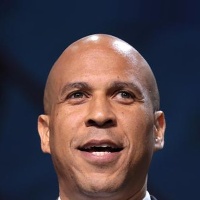
Cory Booker
Senator
NJ
The AI Grand Challenges Act of 2026 establishes a new prize competition program managed by the National Science Foundation (NSF) to spur AI research and development addressing major national problems. This program will award significant cash prizes for solutions in critical areas like national security, health, and energy. The Act also mandates the coordination of federal agencies to publish foundational datasets to support these AI challenges.
AI Grand Challenges Act Puts $10 Million Bounty on Cancer Breakthroughs and National Tech Solutions
The government is essentially launching a high-stakes talent show for tech geniuses, but instead of a recording contract, the prizes are millions of dollars aimed at solving the country’s biggest headaches. The AI Grand Challenges Act of 2026 tasks the National Science Foundation (NSF) with setting up a series of 'Grand Challenges'—think of them as massive, public-facing competitions—to push artificial intelligence beyond just writing emails or making art. Within 12 months, the NSF has to roll out these contests to tackle everything from cybersecurity and energy efficiency to supply chain resilience and disaster prep. This isn't just about prestige; the bill mandates that winners walk away with at least $1,000,000 in cash, and for the really big stuff, the prize pool can soar past $50,000,000.
A Moonshot for Medical Breakthroughs
The most concrete part of this bill is a mandatory 'Cancer Research Challenge' that must be established within the first year. The goal is to use AI to find new ways to detect, treat, or diagnose the most lethal forms of cancer. For a researcher at a university or a developer at a small biotech startup, this is a game-changer: the bill requires a minimum $10,000,000 payout for winners. By setting such a high bar, the policy aims to move the needle on quality-adjusted life years, which is just policy-speak for helping people live longer, healthier lives. If you’ve ever dealt with the frustration of a late diagnosis or a treatment that didn't work, this provision is designed to throw the full weight of AI innovation at those specific real-world heartbreaks.
Keeping it Local and Open
To make sure this doesn't just become a payday for international tech giants, the bill has some strict 'USA-only' fine print. To collect a check, you have to be a U.S. citizen, a permanent resident, or a company incorporated and based right here in the States. This is a clear move to keep the intellectual property and the economic benefits of these AI breakthroughs within our borders. Furthermore, the bill requires the government to play fair with data. The Office of Science and Technology Policy is directed to identify and publish massive federal datasets. This is huge for the underdog developer—it means the 'little guy' working out of a garage or a small office gets access to the same high-quality government data that the big players use, leveling the playing field for whoever has the best idea.
The Accountability Factor
While the bill is high on ambition, it also includes a paper trail to make sure taxpayers aren't just funding a science fair. Every two years, the NSF has to hand over a report to Congress detailing which competitions are active and what the winners actually achieved. They also have to post everything on Challenge.gov so anyone can see the success metrics and validation protocols. This transparency is key because it prevents the program from becoming a black box. Whether you’re a software engineer looking for your next big project or a small business owner hoping for a more resilient supply chain, the bill ensures the results of these multi-million dollar bets are made public, showing exactly how this tech is supposed to make daily life a little bit easier.