This bill mandates a feasibility study for expanding the Lewis & Clark Regional Water System across Iowa, Minnesota, and South Dakota, with a report to Congress detailing construction recommendations and cost-sharing.
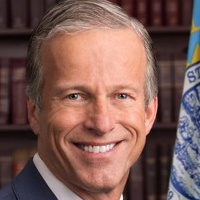
John Thune
Senator
SD
This Act mandates the Secretary of the Interior to conduct a comprehensive feasibility study for expanding the Lewis Clark Regional Water System across Iowa, Minnesota, and South Dakota. The study will evaluate the project's engineering, economic, and environmental aspects, culminating in a report to Congress with a construction recommendation. The federal government will cover up to 50% of the study's cost, which is authorized up to $10 million.
Tri-State Water Expansion Study: $10 Million Plan to Assess Lewis & Clark System Growth in IA, MN, and SD.
Imagine you’re living in a rural town in South Dakota, Iowa, or Minnesota, and the local water system is struggling to keep up with new housing or local business growth. The Lewis & Clark Regional Water System Expansion Feasibility Study Act is the first major step toward fixing that. It directs the Secretary of the Interior to run a deep-dive analysis on whether it makes sense—both financially and structurally—to expand the capacity of the current water system. This isn't just a quick check; the bill mandates a full review of engineering designs, environmental impacts, and a cold, hard look at the cost-benefit ratio to see if the project actually holds water.
Mapping the Flow
The study is tasked with answering a few big questions: Can the current infrastructure handle more volume? What happens to the local environment if we dig new lines? And most importantly, who is going to pay for it? The bill authorizes $10,000,000 for this research, and while the federal government is picking up a significant portion of the tab, it’s not a free ride for the states involved. Under Section 3, the federal government covers no more than 50% of the study costs, meaning local entities have to put skin in the game early on. For a small business owner or a local developer, this study is the green light (or red light) for future growth in the region.
The Price of Admission
If the study comes back positive and the project moves toward construction, the bill already sets some ground rules for the bill. It requires the Secretary to recommend a 'non-Federal share' of construction costs that must be at least 25% of the total price tag. This recommendation has to be based on the 'financial ability' of local entities to pay. For residents, this is the part to watch: if the study underestimates how much a local municipality can afford, that 25% could eventually trickle down into higher local taxes or water rates. The bill also requires the Secretary to consult with Tribal and local authorities, ensuring that those who live on the land have a seat at the table before the first shovel hits the dirt.
Clearing Up the Muddy Waters
There is a bit of a clerical snag in the text that a savvy reader should notice: Section 1 mentions the federal government covering 100% of the study up to $5 million, while Section 3 says the federal share is capped at 50% of a $10 million total. While the math ends up at the same $5 million federal cap, the conflicting language on the percentage split could lead to some bureaucratic headaches when it comes time to sign the contracts. Despite that, the bill is a straightforward 'look before you leap' measure. It gives the region 10 years to get the study done, providing a roadmap for long-term water security without committing billions in construction funds until the facts are in.