This Act prohibits the U.S. government from providing any direct or indirect financial assistance to any entity controlled by an agent of a covered foreign principal from a designated list of nations.
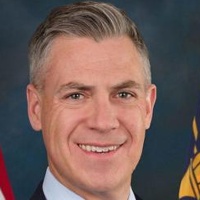
Jim Banks
Senator
IN
The No Funding for Foreign Agents Act prohibits the U.S. federal government from providing any direct or indirect financial assistance to entities controlled by agents of specified "covered foreign principals." This restriction targets entities acting for or under the direction of governments or political parties from a list of designated nations. The bill clearly defines who qualifies as an agent and what constitutes financial assistance, while including specific exceptions for certain existing foreign assistance programs.
No Funding for Foreign Agents Act: Federal Aid Ban Targets Entities Linked to 21 Nations, Including China and Haiti
The “No Funding for Foreign Agents Act” is pretty straightforward on the surface: it bans the federal government from giving money—either directly through grants and contracts, or indirectly through vouchers and certificates—to any entity that is “controlled” by an agent of a “covered foreign principal.” The goal is clearly to cut off U.S. funding that might flow to foreign governments and political parties the U.S. views as problematic. This prohibition covers both direct financial assistance (like a federal contract for IT services) and indirect financial assistance (like a service provider accepting a government-funded voucher for childcare or healthcare services).
The List: Who’s Covered?
The first thing that jumps out is the sheer scope of the “covered nations.” It includes the usual suspects like China, Russia, Iran, and North Korea, but the list is long—21 nations in total. It also includes countries like Haiti, Somalia, Yemen, and Sierra Leone (SEC. 2). If you’re a U.S. non-profit or business that works with, or has any ownership links to, entities in any of these 21 nations, this bill is a major warning flare. The law defines “covered foreign principal” broadly, including the government or political party of any of these nations, or any organization created under their laws.
The Control Conundrum for U.S. Businesses
Here’s where it gets complicated for regular folks and businesses. The ban applies if an entity is “controlled” by an “agent of a covered foreign principal” (SEC. 3). The bill defines “controlled” using existing federal regulations (31 C.F.R. 80.208), which basically means if an agent or combination of agents owns a majority or even a “dominant minority” of the voting interest, they are considered to be in control. This is a low bar. For example, if a U.S. tech startup has a major seed investor who is a dual citizen living in the U.S. but is also registered as a lobbyist for a political party in one of the 21 covered nations, that startup could potentially lose all eligibility for federal grants or contracts.
The Vouchers That Could Vanish
The prohibition on “indirect financial assistance” is the provision that could hit hardest outside of the defense contractor world. Indirect assistance means federal money given to a service provider when a beneficiary uses a government-funded voucher, certificate, or similar payment to choose that provider (SEC. 1). Think about federal programs that use vouchers for childcare, housing, or job training. If a local non-profit providing these services has a board member or even a senior manager who is an “agent” of a covered foreign principal—which could be as simple as being a staff member for a consulate of one of the 21 nations—that non-profit could be disqualified from accepting federal vouchers. This means busy parents or low-income families relying on those specific service providers could suddenly lose access, not because of anything the provider did wrong, but because of a complex foreign control definition.
The Compliance Headache
For any U.S. business or non-profit that receives federal funding, this bill creates a massive new compliance burden. Organizations will now need to meticulously vet their ownership structures, boards, and senior management to ensure no one falls under the extremely broad definition of an “agent of a covered foreign principal.” Given that the definition of “agent” includes anyone acting “under the direction” of a covered principal, and “control” includes “dominant minority” ownership, the risk of accidental non-compliance is high. The sheer number of covered nations and the vague language around control mean that many legitimate U.S. entities could face funding cutoffs, creating a chilling effect on hiring or partnering with anyone who has even a tangential link to one of the 21 nations.