This Act establishes new national security controls, treating the remote access of sensitive items by foreign persons of concern as an export subject to regulation.
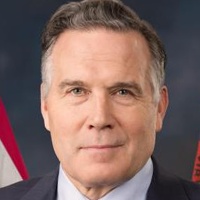
Dave McCormick
Senator
PA
The Remote Access Security Act amends existing law to give the President authority to restrict foreign persons of concern from remotely accessing sensitive U.S. technology via cloud services when it poses a national security risk. This new control treats the provision of remote access the same as traditional exports, applying existing licensing, penalty, and enforcement rules. The bill also mandates consultations with Congress and requires the Commerce Secretary to report on implementation, including minimizing compliance costs for U.S. businesses.
Cloud Security Bill Expands Export Controls to Remote Access for China, Russia, and Iran
The new Remote Access Security Act is basically a major update to how the U.S. controls sensitive technology, moving the goalposts from physical exports to digital access. This bill gives the President, acting through the Secretary of Commerce, the authority to regulate and restrict when a "foreign person of concern" can remotely access certain sensitive U.S. technology via cloud services. This authority lasts for ten years and is aimed squarely at closing a national security loophole in the digital age.
The Cloud Loophole: Closing the Digital Backdoor
Historically, export controls focused on shipping physical goods—like a server or a specialized piece of equipment—out of the country. This bill recognizes that today, the real power is in the data and the software, often accessed instantly through a cloud service provider like Amazon, Microsoft, or Google. Under this new law, providing remote access to items on the U.S. Commerce Control List is treated exactly the same as physically exporting them. This means the same licensing requirements, compliance checks, and penalties that apply to shipping a high-end microchip overseas will now apply to letting a foreign entity log in to a U.S.-based cloud server to use that chip’s capabilities.
The bill defines “remote access” as a foreign person of concern accessing a controlled item via a cloud service, where the Secretary determines the use poses a serious national security risk. A "foreign person of concern" includes governments, entities, or people from countries like China, Russia, Iran, and North Korea. Crucially, the bill spells out four specific high-risk activities this is designed to stop: training AI models for weapons of mass destruction (WMD) design, conducting automated cyberattacks, evading human control of automated systems, or accessing capabilities designed for surveillance and human rights abuses (like spyware).
What This Means for Tech Workers and Businesses
If you work at a U.S. cloud infrastructure service—what the industry calls "Infrastructure as a Service" (IaaS)—this bill is going to dramatically change your compliance department’s workload. Extending complex export control rules to the routine, high-volume transactions of cloud usage creates a massive administrative challenge. Instead of just tracking where a physical server goes, companies now have to track who is logging into their services and what they are doing with the controlled technology.
For U.S. businesses involved in international technological collaboration, this means new red tape. If your company works with a research partner in Shanghai or Moscow that uses your cloud platform to access a controlled item—even for legitimate research—you might now need to apply for a license. The bill mandates that the Commerce Secretary must report back to Congress within a year on how to minimize these compliance costs and maximize privacy, which suggests the government understands the potential burden but is moving forward anyway.
The Big Picture: Authority vs. Autonomy
This legislation grants significant new regulatory power to the executive branch over digital infrastructure. The authority is broad, relying on the Secretary’s determination of a "serious national security risk," which is a subjective standard. While the intent is clearly to prevent adversaries from using U.S. technology to build WMDs or conduct large-scale cyberattacks, the practical application could be messy. For example, how will cloud providers differentiate between a legitimate data science project and an AI model being trained for WMD design?
To keep things transparent, the bill requires the Secretary to consult with Congress before implementing new rules. They must explain the specific national security risk being addressed and, importantly, how the regulations will affect the competitiveness of the U.S. cloud services industry. This consultation requirement is a necessary check, ensuring that the new security measures don't inadvertently cripple one of the most vital sectors of the U.S. economy.