This Act establishes a program to reduce the debt of climate-vulnerable nations in exchange for their commitment to resilience activities and directs U.S. advocacy for international climate insurance programs.
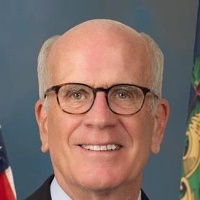
Peter Welch
Senator
VT
The Global Climate Resilience Act of 2025 establishes programs to help vulnerable nations adapt to climate change impacts. It authorizes the reduction of U.S. debt owed by eligible, climate-vulnerable countries, provided the savings are reinvested in resilience activities. Furthermore, the Act directs the U.S. to advocate within international financial institutions for debt restructuring and the creation of an automatic climate insurance program through the World Bank.
New Climate Resilience Bill Trades Debt for Disaster Prep in Developing Nations
The Global Climate Resilience Act of 2025 is essentially a massive debt-for-climate-action swap program on the global stage. It authorizes the U.S. government to reduce or cancel debt owed by developing countries, but only if those countries promise to spend the money they save directly on climate resilience, like preparing for hurricanes or slow-onset disasters like sea-level rise (SEC. 2).
This isn't a blank check. To qualify, a country must meet a few specific criteria: it has to be a low-to-upper-middle-income nation (or a small island developing state), it must be democratically elected, and it cannot have a consistent pattern of gross human rights violations. Crucially, the country must present a solid plan showing exactly how the debt savings will fund climate activities, such as disaster risk reduction or recovery efforts. The bill prioritizes plans that involve local and Indigenous communities and aim to address gender and social inequalities, ensuring the benefits reach the most vulnerable populations (SEC. 2).
The Great Global Swap Meet
This bill gives the U.S. President significant power to get creative with debt relief. Beyond simple debt cancellation, the President can authorize complex financial maneuvers like Debt-for-Resilience Swaps and Debt Buybacks (SEC. 2). Think of a swap like this: Instead of Country A paying the U.S. back $100 million, the U.S. cancels that debt in exchange for Country A funding $100 million worth of mangrove restoration projects or early warning systems.
This program is designed to be self-sustaining in a way, as the President can purchase privately owned debt of an eligible country—at no more than 65% of its face value—to facilitate these swaps. This is a complex financial tool, and while it’s intended to free up capital for climate action, it does vest a lot of transactional authority in the executive branch, demanding strong oversight to ensure the funds are used as promised and not simply diverted (SEC. 2).
Pushing for Change at the World Bank
This legislation doesn't stop at U.S. debt. It also directs U.S. Executive Directors at major international financial institutions (IFIs) like the World Bank and the IMF to use their voice and vote to advocate for similar debt reduction and restructuring policies globally (SEC. 3). This means the U.S. is formally pushing for a worldwide shift in how climate-vulnerable nations are financed, recognizing that servicing massive debt loads prevents them from preparing for the next climate disaster.
Furthermore, the bill mandates that U.S. representatives advocate for a new international climate insurance program at the World Bank (SEC. 4). The goal is to create a system that automatically pays out to eligible countries after a natural disaster (like a hurricane or flood). This automatic payout system would help governments and small producers get back on their feet immediately, rather than waiting months for aid. This is a smart move, as it treats climate risk like insurable risk, potentially lowering the massive economic shock waves that follow extreme weather events.
Who Pays and Who Benefits?
On the plus side, this bill is a huge win for climate-vulnerable nations, particularly Small Island Developing States (SIDS), which face existential threats from sea-level rise. It forces climate spending, promotes democratic governance (since non-democratic governments are excluded), and ensures that relief efforts consider social equity. For example, a country in the Caribbean could see millions in debt canceled, allowing it to invest in stronger infrastructure instead of debt payments.
The cost, however, falls back on the U.S. Treasury, as Congress must appropriate funds to cover the canceled debt. While this debt reduction is explicitly structured not to count as “assistance” under certain laws that cap foreign aid, taxpayers are still covering the lost value of the loans. It’s a trade-off: The U.S. forgives old debt to boost global climate stability and reduce future disaster aid needs, but it requires new appropriations to do so.