This act directs the Secretary of HHS to issue non-mandatory guidance to states on strategies to expand the mental health and substance use disorder provider workforce within Medicaid and CHIP, focusing on rural and underserved areas.
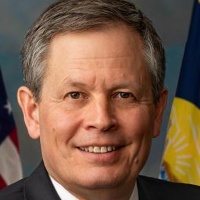
Steve Daines
Senator
MT
The Expand the Behavioral Health Workforce Now Act directs the Secretary of Health and Human Services to issue guidance to states on strategies for increasing the education, training, recruitment, and retention of mental health and substance use disorder providers within Medicaid and CHIP. This guidance specifically aims to bolster the behavioral health workforce, particularly in rural and underserved areas. States will receive non-mandatory recommendations on how to utilize existing program authorities to achieve these workforce goals.
New Act Directs Federal Guidance to Boost Mental Health Workforce in Rural Areas
The “Expand the Behavioral Health Workforce Now Act” aims to tackle a major pain point for many families: finding a mental health or substance use disorder provider who actually takes Medicaid or CHIP, especially outside of major cities. This bill doesn’t drop new mandates or funding, but instead directs the Secretary of Health and Human Services (HHS) to issue non-mandatory guidance to states within 12 months of the Act’s enactment (SEC. 2).
The Federal Cheat Sheet for States
Think of this guidance as a high-level playbook for state Medicaid and CHIP agencies. The goal is to give them strategies for how to use their existing programs and authorities—like waivers under section 1115 of the Social Security Act—to better educate, train, recruit, and retain behavioral health providers (SEC. 2). The emphasis here is critical: the guidance must specifically focus on improving the capacity of this workforce in rural and underserved areas. For someone trying to find a therapist for their teenager in a small town, a bigger, better-trained pool of providers who accept public insurance is a huge deal.
Why Guidance Matters (and Where It Falls Short)
The good news is that this is a direct federal acknowledgment of the crisis in behavioral health access, particularly for those covered by public insurance. By sharing best practices, the federal government helps states avoid reinventing the wheel. If one state has found a clever way to use a waiver to fund loan repayment for therapists who move to rural counties, this guidance would share that strategy with every other state. This could translate directly into more providers in places that currently have none, improving access for folks working hourly jobs or running small businesses in those areas.
However, there’s a crucial detail: the guidance is explicitly non-mandatory (SEC. 2). This means states are given the recipe, but they aren't required to cook the meal. While the guidance might be insightful and practical, its real-world impact hinges entirely on whether cash-strapped state legislatures and Medicaid agencies choose to adopt the recommended strategies. It’s a step in the right direction, providing tools and direction, but it leaves the heavy lifting of implementation—and the associated costs—up to the states.