This Act establishes new public consultation requirements for nuclear plant decommissioning, creates grant programs to support community advisory boards, and provides financial assistance to local governments impacted by stranded nuclear waste and plant closures.
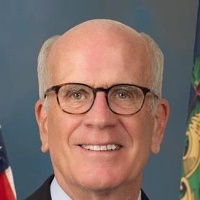
Peter Welch
Senator
VT
The Nuclear Plant Decommissioning Act of 2025 overhauls the process for closing nuclear power facilities by mandating increased public and state consultation for decommissioning plans and license transfers. It establishes new grant programs to fund local community advisory boards and provides direct financial assistance to communities dealing with stranded waste and economic disruption. Furthermore, the bill creates dedicated economic recovery accounts funded by plant operators to support long-term development in host communities.
Nuclear Plant Decommissioning Bill Mandates $500K Operator Fee and Gives Local Towns $15/kg for Stored Waste
The Nuclear Plant Decommissioning Act of 2025 is the friend who finally makes sure the neighbor who threw the party cleans up the mess and pays for the damage. It’s a major overhaul of how nuclear power plants must close down, focusing heavily on transparency and financial support for the towns left holding the bag.
Mandatory Consultations: No More Surprise Closures
Right now, when a nuclear plant operator decides to shut down and decommission, the process can feel like a black box to the local community. This bill changes that by making public involvement mandatory before the operator can even submit a major plan to the Nuclear Regulatory Commission (NRC). Specifically, under Section 2, the licensee must consult with the host state and any Tribal government within 50 miles of the plant before submitting a major decommissioning plan (a Covered PSDAR) or transferring the license. Once the plan is submitted, the NRC must hold at least two public meetings and provide a minimum 90-day comment period. The host state even gets to file a formal statement of support, conditional support, or nonsupport, which the NRC must seriously consider.
The Real-World Impact: For the local school board or city council, this means they get a seat at the table early on. No more learning about the long-term plan for the spent fuel rods from a press release. It also includes a crucial provision: the NRC cannot approve a plan unless the licensee agrees to comply with state environmental laws for air, water, soil, or radiation standards if those state laws are more restrictive than federal law. This is a big win for state-level environmental protection.
The $15/kg Grant and the $500K Fee
This bill sets up two major financial mechanisms that will hit operators and benefit local governments directly. First, Section 5 establishes a noncompetitive grant program for local governments (counties, cities, school districts) that have “stranded nuclear waste”—that is, spent fuel stored in dry casks or pools—within their boundaries. These local governments are eligible for a grant of $15 for every kilogram of spent nuclear fuel stored at the site, paid out annually.
The Real-World Impact: This is direct financial relief for communities that lose the tax base of an operating plant but are still stuck hosting the waste. If a plant has 1,000,000 kg of spent fuel (a typical large plant might have 2,000,000 kg over its lifetime), that’s an annual grant of $15 million split among the affected local governments. This money is designed to offset the economic and social impacts of being a long-term nuclear waste storage site.
On the flip side, Section 3 creates a mandatory fee for the operators. Any licensee submitting a Post-Shutdown Decommissioning Activities Report (PSDAR) must pay a fee of $500,000 per nuclear power plant into a new Community Advisory Board Fund. Crucially, the bill explicitly says operators cannot use money from their existing decommissioning trust fund (the pot of money set aside for cleanup) to pay this fee. This means the half-million dollars must come from the operator’s other capital, which could be a significant, unbudgeted cost for some companies.
Economic Recovery Accounts: Funding the Future
Perhaps the most significant financial obligation for operators is found in Section 6, which mandates the creation of a “Host Community Economic Recovery Account” for every plant undergoing decommissioning. This account, managed by the Secretary of Commerce, must be funded by the plant operator to ensure its balance is never less than 2% of the plant’s total decommissioning financial assurance (like the nuclear decommissioning trust).
The Real-World Impact: This is essentially a mandatory severance package for the local economy. The money in this account is then used for grants to the host community for economic development planning and comprehensive strategy. For a large plant with a multi-billion dollar trust fund, this could mean tens of millions of dollars are immediately unlocked for local economic revitalization efforts. The grant process must start up to five years before the plant’s scheduled shutdown, giving towns a massive head start on planning for the post-nuclear future. Furthermore, for small, rural, or disadvantaged communities, the bill ensures the federal government covers 100% of the project cost for economic assistance, eliminating the need for local matching funds.
While this bill provides much-needed financial stability and transparency for host communities, the new financial burdens on operators—the $500,000 fee and the mandatory 2% economic recovery account contribution—will certainly be felt. The NRC is also required to revise its regulations to ensure these new obligations don't inadvertently drain the main decommissioning trust funds, a detail that will be critical to watch to make sure the money meant for cleanup stays where it belongs.