This bill authorizes \$74 million for fiscal years 2026 and 2027 to support the core functions and programs of the United Nations Population Fund (UNFPA), excluding its programs in China.
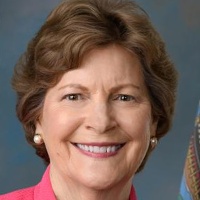
Jeanne Shaheen
Senator
NH
This bill authorizes $74 million in U.S. funding for the United Nations Population Fund (UNFPA) for fiscal years 2026 and 2027. Congress finds that UNFPA is essential for global sexual and reproductive health, preventing maternal deaths, and combating gender-based violence worldwide. The legislation affirms that supporting UNFPA is a strategic U.S. foreign policy priority that advances global health and stability.
Congress Authorizes $74 Million Annually for Global Health Services, Excluding Programs in China
The “Support UNFPA Funding Act” is essentially a commitment by the U.S. government to put its money where its mouth is regarding global women’s health. This bill authorizes $74 million for both Fiscal Years 2026 and 2027 to be sent to the United Nations Population Fund (UNFPA).
The Check is in the Mail: What UNFPA Actually Does
For those who haven’t spent time reading UN reports, the UNFPA is the UN’s sexual and reproductive health agency. This bill’s findings section lays out exactly what they do, which is critical care in over 150 countries. We’re talking about ending preventable maternal deaths, providing contraception access, and fighting gender-based violence, including practices like child marriage and female genital mutilation. The bill specifically notes that UNFPA keeps U.S. money separate, complies with U.S. restrictions, and does not fund or promote abortion, confirming its adherence to existing U.S. legal requirements (SEC. 2).
This isn’t just about feel-good foreign aid; the bill frames it as a strategic foreign policy priority. Providing access to voluntary family planning is seen as a cost-effective way to stabilize regions and increase women’s economic participation, which ultimately serves U.S. interests by fostering more stable global partners (SEC. 3).
The Real-World Cost of Pulling Funding
When funding for UNFPA was halted in 2025, the impact was immediate and brutal, according to the bill’s findings. This is where policy meets reality. For instance, in Afghanistan, the loss of funds led to the closure of 21 health centers, with 500 more at risk. In Yemen, the halt meant 1.5 million women and girls lost services, and 44 health facilities closed. These aren’t abstract numbers; these are doctors and nurses who can no longer provide safe deliveries or essential reproductive care in conflict zones (SEC. 2).
By authorizing $74,000,000 for each of FY 2026 and FY 2027 (SEC. 4), the U.S. is aiming to reverse these losses. This funding is specifically earmarked to support core functions like ending maternal deaths, promoting voluntary family planning, and stopping gender-based violence. Think of this as getting the lights back on and the supply chains moving for millions of people who rely on these services for basic survival, especially in humanitarian crisis settings.
The One Big Exception
There is one major, specific restriction in the authorization section: the funding cannot be used for any UNFPA programs operating in China (SEC. 4). While the bill strongly supports UNFPA’s global mission, this provision carves out a clear geopolitical boundary for where U.S. tax dollars can be spent. For the UNFPA, this means they have to manage their global budget carefully, ensuring that U.S. funds strictly adhere to this exclusion. This is a common practice in foreign aid bills, reflecting ongoing political tensions and the need to align international funding with specific U.S. foreign policy objectives.