This bill amends the National Labor Relations Act to prohibit employers and labor organizations from employing or representing unauthorized aliens, with a good-faith verification exception.
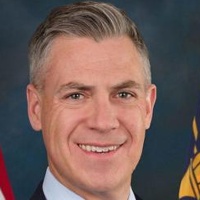
Jim Banks
Senator
IN
The Putting American Workers First Act amends the National Labor Relations Act to prohibit employers and labor organizations from employing or representing unauthorized aliens. This measure establishes these actions as unfair labor practices, though it includes a good-faith exception based on using established employment verification systems. Furthermore, discharging an unauthorized alien cannot be used as evidence of animus against an employee's protected labor rights.
New Bill Makes Hiring or Representing Undocumented Workers an 'Unfair Labor Practice'
The “Putting American Workers First Act” takes a significant swing at the intersection of immigration and labor law by making it an unfair labor practice (ULP) for employers to hire, and for unions to represent, individuals who are unauthorized aliens. Essentially, this bill plugs immigration enforcement directly into the National Labor Relations Act (NLRA), the main law governing union and workplace rights.
The New Rules for Hiring and Organizing
Under this proposal, if you’re an employer, hiring an unauthorized alien becomes a ULP under Section 8 of the NLRA. If you’re a union, attempting to represent an unauthorized alien for collective bargaining also becomes a ULP. This is a big deal because ULPs are handled by the National Labor Relations Board (NLRB), which can issue cease-and-desist orders and impose serious penalties. The bill does offer a safety valve: employers and unions are protected if they make a “good-faith effort” to verify employment status using existing systems outlined in the Immigration and Nationality Act. This means if you diligently run the checks, you’re likely in the clear, even if a mistake slips through.
The Union Catch-22: Who Gets Protection?
This is where things get complicated for labor organizations. Currently, unauthorized workers, like all workers, have certain rights under the NLRA, including the right to organize and protest unfair working conditions. This bill explicitly strips unions of the ability to represent these workers for collective bargaining. Think of a group of workers organizing for better wages—if some members are unauthorized, the union could face a ULP charge just for trying to negotiate on their behalf. This provision effectively walls off a segment of the workforce from the protections of collective bargaining, potentially weakening union power across the board and creating a two-tiered system of labor rights.
Firing Workers and Anti-Union Retaliation
Perhaps the most impactful provision deals with how an employer's motive is judged when they fire someone. When a worker claims they were fired because they were trying to organize a union (a classic ULP), they often have to prove the employer acted out of “anti-union animus.” This bill states that if an employer fires an unauthorized alien, that discharge “cannot be used as evidence” that the employer acted with anti-union animus. This is a massive shield for employers. Imagine a worker who is a known union organizer. If the employer fires them, claiming it’s because of their immigration status, the union can no longer point to that firing as proof that the employer was actually trying to bust the union. This removes a crucial piece of evidence workers rely on to prove illegal retaliation, making it much harder to challenge firings aimed at stopping organizing efforts, potentially leaving all workers—authorized or not—more vulnerable to employer pushback during union drives.