This bill establishes a new occupational category for Direct Support Professionals and provides federal grants to states for establishing or expanding paid family and medical leave programs.
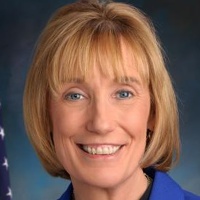
Margaret "Maggie" Hassan
Senator
NH
This bill establishes the Recognizing the Role of Direct Support Professionals Act, aiming to formally recognize Direct Support Professionals (DSPs) by requiring the Office of Management and Budget to consider creating a distinct occupational category for them in the federal classification system. The legislation also authorizes significant federal grants to states to establish or expand paid family and medical leave programs. If a separate DSP classification is not created, a report explaining the decision must be submitted to Congress.
Congress Authorizes $1 Billion for State Paid Leave Programs While Seeking Formal Recognition for Direct Support Professionals
This bill, titled the Recognizing the Role of Direct Support Professionals Act, is actually a two-for-one deal. On one hand, it addresses a critical workforce issue in the disability community by pushing for formal recognition of Direct Support Professionals (DSPs). On the other, it authorizes a significant chunk of federal money—$1 billion over five fiscal years (2024 through 2028)—to help states finally get serious about paid family and medical leave.
The DSP Identity Crisis: What’s in a Name?
The first major component of the bill focuses on Direct Support Professionals. These are the folks who provide crucial day-to-day support, helping individuals with intellectual and developmental disabilities live independently, participate in their communities, and manage daily tasks like cooking or shopping. Congress notes that the current federal job classification system doesn't accurately capture this work, often lumping DSPs in with generic home health or personal care aides. This lack of clear classification makes it tough to track labor shortages and address the industry’s crushing 39% national turnover rate (Sec. 2).
To fix this, the bill requires the Director of the Office of Management and Budget (OMB) to consider creating a brand-new, separate job code for DSPs within the Standard Occupational Classification (SOC) system during the next revision. This new category would be placed under “healthcare support occupation” (Sec. 3). While the word “consider” means the OMB Director technically doesn't have to do it, if they decide against it, they must submit a report to Congress within 30 days explaining why (Sec. 4). For DSPs, this move could lead to better data, more targeted policy solutions, and the professional recognition their demanding work deserves.
$1 Billion for Paid Leave Start-Ups
The second, and arguably bigger, part of the bill deals with paid leave. Section 5 authorizes $1 billion in grant funding for the Department of Health and Human Services to distribute to states. The goal is to help states either establish a new paid family and medical leave program or expand an existing one. This money is for start-up costs—think program design, IT systems, and initial outreach—not for paying out the actual employee benefits.
To qualify for this federal cash, a state’s paid leave program must meet several strict requirements. For instance, the program must provide at least 12 weeks of wage replacement for common reasons like the birth of a child, caring for a family member with a serious health condition, or managing the employee’s own serious illness. Critically, the wage replacement must be generous: at least 80% of the employee’s wages, capped at $1,000 per week, adjusted annually for inflation (Sec. 5).
For the average worker, this is huge. If your state gets one of these grants and implements the required program, you’d have access to protected, partially paid time off when life inevitably throws a curveball. The definition of “Family member” is notably broad, including spouses, domestic partners, and anyone else related by “blood or affinity whose close association is the equivalent of a family relationship,” which is a significant win for modern families (Sec. 5).
The Fine Print: Exemptions and Funding Gaps
There are a couple of crucial details to note. First, states are allowed to exempt employers with fewer than 50 employees from participating in the paid leave program. If you work for a small business, you might miss out on this benefit, creating an uneven playing field for workers depending on the size of their employer. Second, and most confusingly, Section 5 authorizes the $1 billion in grants but concludes with a clause stating that “No additional funds are authorized to be appropriated to carry out this Act.” This creates a serious contradiction: Congress authorizes the grants but then seems to negate the funding mechanism. This ambiguity means that while the policy framework for the $1 billion grant program is laid out, the actual money might not be guaranteed without further legislative action.
In short, this bill aims to professionalize a critical care workforce while simultaneously offering a massive incentive for states to finally deliver on robust paid family and medical leave. It’s a blueprint for significant change, but the actual implementation—especially securing the $1 billion—will depend on how these provisions are interpreted and funded down the line.