This bill allows Members of Congress to use Department of Veterans Affairs facilities to meet with their constituents under specific regulatory guidelines.
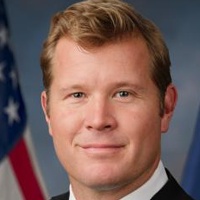
Tim Sheehy
Senator
MT
The Improving Veterans Access to Congressional Services Act of 2025 establishes a program allowing Members of Congress to use Department of Veterans Affairs (VA) facilities to meet with their constituents. The Secretary of Veterans Affairs must create regulations ensuring these spaces are accessible, available during business hours, and subject to fair rental rates. These regulations strictly prohibit political campaigning or activities that interfere with VA operations or patient privacy.
New Bill Opens VA Facilities for Congressional Meetings, Bans Campaigning 60 Days Before Elections
The Improving Veterans Access to Congressional Services Act of 2025 is pretty straightforward: it mandates that the Department of Veterans Affairs (VA) allow Members of Congress to use space inside VA facilities to hold meetings with their constituents. The goal is to make it easier for veterans, who are already at the VA for appointments or services, to connect with their elected representatives without having to travel to a separate district office.
This isn't a free-for-all, though. The bill requires the VA Secretary to draft strict regulations within 90 days. The space provided must be visible and accessible to constituents, and critically, the Member of Congress has to pay rent. That rental rate must be "similar to what the General Services Administration charges for office space in that area." This is where things get a little fuzzy (Vagueness Level: Medium). Depending on how the VA and GSA interpret "similar," this could mean the Member pays a fair market rate, or it could end up being a heavily subsidized space if the rate is set too low. Taxpayers should keep an eye on that final number, as any shortfall means the public is covering the difference.
The Rules of the Road: No Campaigning Allowed
The bill is very clear on what can't happen in these taxpayer-funded spaces. The regulations must explicitly prohibit any campaigning, soliciting political support, or opposing/supporting changes to federal law or policy (Section 2). This is a necessary firewall to keep constituent services separate from electioneering, especially in a sensitive environment like a VA facility.
But the biggest restriction involves the election cycle. The regulations cannot permit a Member to use a VA facility during the 60-day period right before a federal election in that jurisdiction. This means that during the most intense period of political activity, the facility is off-limits. While this is a strong safeguard against using federal property for political gain, it also limits access during a time when some constituents might need their representative the most. It’s a trade-off between access and ethics.
Protecting Patients and Operations
Another major provision focuses on protecting the privacy and operations of the VA. Members are strictly forbidden from doing anything that interferes with facility security or normal operations (Section 2). More importantly, they cannot photograph or record any veteran patient, visitor, or VA employee without that individual's consent. This is a huge deal. VA facilities are places of healthcare and privacy, and the last thing anyone needs is a camera crew or political staff accidentally capturing sensitive patient information or disturbing the clinical environment. The bill even bans using any photography or recording from the VA space in political campaign materials.
For the VA staff, this means a new layer of administrative work and security concerns. While the bill says the space used must not be "regularly used by VA personnel," fitting a congressional office into a busy medical center is always going to require coordination. If the scheduling or space allocation isn't managed perfectly, this could easily lead to operational friction, increasing the workload for staff who are already focused on patient care. Ultimately, this bill provides a clear path for better constituent access, but the success of the program will hinge entirely on those 90-day regulations and how well the VA can integrate political offices without disrupting healthcare services.