This bill prohibits foreign nationals from donating to specific voter activities and restricts the federal government from collecting or releasing the donor information of tax-exempt organizations.
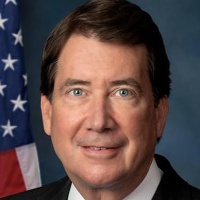
Bill Hagerty
Senator
TN
This Act strengthens prohibitions against foreign nationals donating to specific voter activities, including registration and get-out-the-vote efforts. It also clarifies that state and local ballot initiatives are included in the definition of an election for these purposes. Furthermore, the bill restricts the federal government from collecting or publicly releasing the identity of donors to most tax-exempt organizations, with strict penalties for unlawful disclosure.
Foreign Money Ban Expands to Local Ballots, While Donor Privacy Gets Felony Protection
If you’ve ever felt like policy debates are happening in a different language, you’re not alone. This bill, the “Preventing Foreign Interference in American Elections Act,” is a dense piece of legislation that tackles two major policy areas: who can spend money on elections and who gets to know who is donating to non-profits. Let’s break down what this means for your daily life.
The core idea here is to tighten the screws on foreign interference. The bill significantly expands the existing ban on foreign nationals making donations. This isn’t just about federal races anymore. The ban now explicitly covers money used for specific voter activities like registration drives, ballot collection, “get-out-the-vote” (GOTV) efforts, and, crucially, it now applies to state and local ballot initiatives, referendums, and recall elections. If you’re involved in a local campaign to fund a new school or pass a zoning change, this bill makes it clear that foreign money is prohibited from those specific activities. It also adds a new rule against “indirect contributions,” meaning you can’t funnel money to someone else with the understanding they’ll use it for a prohibited activity.
The Enforcement Catch-22
Section 2 also introduces some interesting, and potentially complicated, changes to how the Federal Election Commission (FEC) handles investigations. If someone is accused of violating the foreign money ban, they can submit a certification—a sworn statement under penalty of perjury—that they didn't break the law. Here’s the kicker: the FEC must consider this certification, and if they decide to investigate further, the investigation must be limited only to the factual matter necessary to determine if the alleged violation happened. Think of it like this: the person being investigated gets to narrow the field of play. If the FEC issues a subpoena that the accused feels is too broad, they can petition a U.S. District Court to quash it. This provision aims to provide procedural protection for the accused, but it also raises questions about whether it could slow down or restrict the FEC’s ability to conduct thorough investigations, especially in complex cases involving covert foreign funding.
Nonprofit Donor Privacy: A Major Shift
The second major part of this bill, Section 3, focuses on protecting the privacy of donors to 501(c) tax-exempt organizations—think advocacy groups, social welfare organizations, and trade associations, but not political action committees (527s). This section broadly prohibits federal government entities from collecting or publicly releasing information that identifies any donor to these groups. For advocacy organizations, this is a huge win for donor privacy, ensuring that people who support causes—whether it’s environmental protection or business lobbying—can do so without fear of their names being collected or released by the federal government.
However, this prohibition is not absolute. The bill outlines specific exceptions where collection or release is still allowed, primarily for the IRS (under specific tax law sections), the FEC (under specific campaign finance laws), and the Secretary of the Senate and Clerk of the House (under the Lobbying Disclosure Act). If the federal government entity isn't acting under one of these specific legal authorities, they cannot collect or release the donor data. To underscore the seriousness of this privacy protection, the bill makes the willful, unlawful disclosure of donor information by any current or former federal employee a felony, punishable by up to five years in prison and a $250,000 fine, plus dismissal from office.
What This Means for You
If you’re a regular person, the biggest impacts are twofold. First, the expansion of the foreign money ban means local elections and ballot measures—the issues that often directly affect your property taxes, schools, and community—should theoretically be better shielded from foreign influence. Second, if you donate to a non-profit organization that advocates on an issue you care about (say, a local land trust or a national policy think tank), this bill provides significant new federal legal protection against the government collecting or releasing your name and address simply because you donated. This is a clear trade-off: increased scrutiny on foreign money in elections, paired with a major boost to donor privacy for domestic non-profits, even as the enforcement process for the former gets a new layer of complexity.