This resolution expresses the House of Representatives' strong opposition to any clemency for Ghislaine Maxwell due to her lack of remorse and refusal to accept responsibility for her sex trafficking crimes.
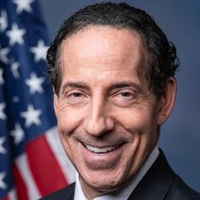
Jamie Raskin
Representative
MD-8
This resolution expresses the strong opposition of the House of Representatives to any commutation, clemency, or pardon for convicted child sex trafficker Ghislaine Maxwell. Congress asserts that Maxwell has shown no remorse for her serious crimes and has failed to accept responsibility. Therefore, the House believes she does not qualify for early release and reaffirms support for her victims.
House Resolution Formally Opposes Clemency for Ghislaine Maxwell, Citing Lack of Remorse
This isn't a bill that changes a law or allocates money; it’s a resolution—a formal statement of Congress’s opinion—and this one is focused squarely on the federal prison sentence of Ghislaine Maxwell, who was convicted for her role in a child sex trafficking ring. Essentially, the House of Representatives is putting the executive branch on notice: they are officially against the President granting Maxwell any form of commutation, clemency, or pardon. This is Congress weighing in directly on a specific, high-profile criminal sentence, citing her refusal to accept responsibility for her crimes and her disparagement of victims as the key reasons why she shouldn't get an early exit.
The House Weighs In on the Pardon Power
Resolutions like this are often used to express support for victims, and this one certainly does, reiterating the House’s backing for survivors of both Maxwell and Jeffrey Epstein. But the core action here is the formal opposition to clemency. Think of it like this: the President has the constitutional power to grant pardons and commutations—it's a check on the judicial branch. This resolution is Congress trying to check the President's check, essentially pre-empting any move by the executive branch to shorten Maxwell's 20-year sentence. For the average person, this highlights a rare, public tension point between the branches of government over a constitutional power, driven by a case with massive public scrutiny. It’s the legislative branch saying, “We’ve seen the facts, and we don’t think she meets the criteria for mercy.”
The Criteria for Clemency
The resolution explicitly argues that Maxwell fails to meet the requirements typically considered by the Department of Justice's Office of the Pardon Attorney, specifically pointing to her lack of remorse and refusal to take responsibility. This is where the resolution moves beyond a simple statement of opposition and tries to influence the formal process. When the Department of Justice reviews clemency petitions, they look for things like acceptance of guilt, rehabilitation, and the severity of the crime. By focusing on Maxwell’s perceived attitude—her lack of remorse and continued false statements—Congress is essentially trying to define the terms of the debate and exert political pressure on the process before a formal application is even considered. It’s a way of using the legislative voice to reinforce the public demand for accountability in a high-stakes case.
Beyond the Sentence: The Epstein Files
In addition to opposing clemency, the resolution also reaffirms the necessity of fully and completely releasing the files related to Jeffrey Epstein. While not directly related to Maxwell's sentence, this provision aligns the House with victims and the public in demanding transparency and a full accounting of the network that enabled these crimes. For the victims, and anyone following this case, this part of the resolution offers a nod toward achieving broader justice and accountability, ensuring that the focus remains on uncovering the full scope of the conspiracy.