This resolution formally recognizes and honors the service, courage, and sacrifice of both Korean War veterans and Korean Defense Veterans.
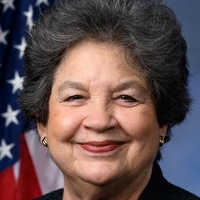
Lois Frankel
Representative
FL-22
This resolution formally honors the courage and sacrifice of U.S. veterans who served during the Korean War and those who have served in Korea since the 1953 armistice. It seeks to ensure these service members receive the recognition they deserve for their vital role in defending democracy and freedom on the Korean Peninsula.
House Resolution Formally Recognizes Korean War and Defense Veterans, Addressing Decades of the 'Forgotten War'
This resolution marks a formal shift in how the U.S. government acknowledges the nearly 1.8 million service members who served during the Korean War and the thousands more who have maintained the armistice since 1953. By detailing the specific toll of the conflict—including 36,574 lives lost and 103,284 wounded—the bill seeks to officially dismantle the narrative of Korea as the 'forgotten war.' It specifically expands recognition beyond those who fought between 1950 and 1953 to include 'Korean Defense Veterans,' the personnel who have served on the peninsula in the seven decades since the cease-fire.
Honoring the Long Watch
For the roughly 25,000 U.S. troops currently stationed in South Korea and the veterans who served there during the Cold War, this resolution provides a long-overdue 'thank you.' It moves beyond the 1953 armistice signed at Panmunjom to acknowledge that the mission never truly ended, noting that hundreds of Americans have died maintaining peace in the years following the official conflict. For a modern veteran who served in the DMZ in the 1980s or 1990s, this means their service is now explicitly categorized alongside the original combat veterans in the eyes of the House, recognizing the 'technical state of war' that persists today.
Closing the Recognition Gap
The bill highlights a specific cultural oversight: unlike the homecomings for World War I and II, Korean War veterans often returned to a country that didn't fully grasp the scale of their sacrifice. By documenting the extreme conditions and the defense of democracy against the 1950 invasion, the resolution acts as a formal record to ensure these stories aren't lost to time. For families of those killed or wounded, it serves as a permanent federal acknowledgment that their sacrifice was vital to global stability, regardless of how much time has passed since the initial invasion.