This bill condemns the People's Republic of China's Law on the Promotion of Ethnic Unity and Progress and the Chinese Communist Party's campaign of forced assimilation against ethnic and religious minorities.
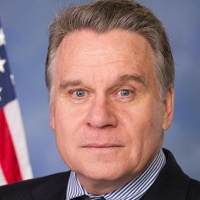
Christopher "Chris" Smith
Representative
NJ-4
This bill condemns the People's Republic of China's new Law on the Promotion of Ethnic Unity and Progress as a tool for forced assimilation against ethnic and religious minorities. It highlights ongoing human rights abuses, including genocide in Xinjiang and cultural erasure in Tibet. The legislation urges sanctions against responsible officials and calls for international coordination to protect diaspora communities and religious autonomy.
Proposed Resolution Targets China’s New 'Ethnic Unity' Law and Pushes for Sanctions Against Forced Assimilation
A new resolution is hitting the floor that takes a hard line against China’s upcoming 'Law on the Promotion of Ethnic Unity and Progress,' set to take effect on July 1, 2026. While the name sounds positive, the bill identifies this law as a tool for forced assimilation, requiring that the Chinese Communist Party’s (CCP) ideology and Mandarin Chinese take priority over the unique languages and religions of groups like the Uyghurs, Tibetans, and Mongolians. For anyone who values the freedom to pass down their own heritage or faith to their kids, this resolution paints a grim picture of state-mandated cultural erasure.
The Long Arm of the Law
One of the most striking parts of this resolution is the focus on 'extraterritorial provisions.' This isn't just about what happens across the ocean; the bill warns that China’s new law could be used to intimidate or punish people living right here in the United States for things they say, write, or practice. Imagine a journalist in D.C. or a student in California being targeted by a foreign government for a social media post about their culture. To combat this, the resolution urges the Department of Homeland Security and the Attorney General to step up protections for diaspora communities who are facing harassment and surveillance on U.S. soil.
Consequences and Cold Hard Cash
The resolution doesn't just wag a finger; it calls for actual consequences. It urges the President and the Treasury to use the Global Magnitsky Act to slap sanctions and visa restrictions on any officials or entities profiting from or enforcing these forced-assimilation policies. This could mean freezing assets or blocking travel for those involved in the coercive boarding school systems in Tibet—where an estimated one million children have been separated from their families—or those linked to the mass detention and forced labor in the Xinjiang region.
Religious Freedom and Global Pressure
There is also a specific focus on the autonomy of Tibetan Buddhism. The bill asserts that the succession of the Dalai Lama is a religious matter for the community to decide, not a political appointment for the CCP. Beyond that, it pushes the Secretary of State to coordinate with allies like the UK, Japan, and the EU to monitor these human rights violations and keep the pressure on at the United Nations. By funding programs that preserve endangered languages and oral histories, the resolution aims to keep these cultures alive even as the new law attempts to phase them out of public life.