This resolution supports designating a National Learn to Swim Week to promote water safety education and increase access to swimming lessons across the nation.
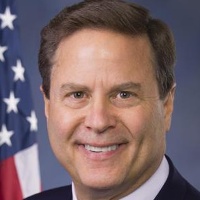
Donald Norcross
Representative
NJ-1
This resolution supports designating a "National Learn to Swim Week" beginning on the fourth Sunday in June to raise awareness about water safety. It emphasizes that learning to swim is a lifesaving skill that significantly reduces the risk of drowning, which is a leading cause of death for young children. The bill encourages federal, state, and local efforts to promote and expand access to affordable swimming lessons for all Americans.
New National Learn to Swim Week Proposed for June: Initiative Targets 88% Reduction in Child Drowning Risk
Drowning is the leading cause of death for children ages 1 to 4 in the U.S., but a new resolution aims to change that by designating the week starting on the fourth Sunday in June as 'National Learn to Swim Week.' This isn't just about adding another date to the calendar; it is a formal push to recognize swimming as a vital life skill. The resolution cites NIH-supported data showing that formal swimming lessons can cut the risk of drowning for young children by a staggering 88 percent. By focusing on the end of June—just as summer heat sends everyone to the pool or beach—the initiative seeks to make water safety a national priority before the peak of vacation season.
Breaking the Surface on Safety
The resolution goes beyond basic 'doggy paddling' to emphasize a comprehensive safety strategy. It specifically highlights the need for four-sided isolation fencing around pools to prevent unsupervised access and the use of Coast Guard-approved life jackets for inexperienced swimmers. For the average family, this means a shift toward viewing swimming lessons not just as an extracurricular activity like soccer or piano, but as a critical safety requirement. The bill also encourages swimming only in areas with lifeguards, acknowledging that even strong swimmers can face unexpected trouble in the water.
Closing the Access Gap
One of the most striking parts of this resolution is its focus on the 'swimming gap' in underserved communities. Currently, 64 percent of African-American children and 45 percent of Hispanic children lack basic swimming skills, often due to a lack of affordable facilities or cultural barriers. The resolution calls on federal, state, and local governments to step up with public funding and partnerships to make lessons accessible to everyone, regardless of their zip code or income. It also suggests that schools and youth organizations should start weaving water safety education directly into their regular programs, treating it as essential knowledge for any student.
A Lifelong Skill Set
Beyond the immediate goal of preventing the roughly 4,000 annual drowning deaths in the U.S., the resolution frames swimming as a path to long-term health and inclusion. It acknowledges that if a parent doesn't know how to swim, there is only a 19 percent chance their child will learn. By encouraging adult lessons alongside youth programs, the goal is to break that cycle. For busy parents and workers, this could eventually mean more community-supported, low-cost options for exercise and recreation, ensuring that the local pool is a place of confidence and safety rather than a source of anxiety.