This resolution acknowledges the Black Women Best framework and supports its principles—including guaranteed income, expanded tax credits, equitable healthcare, and restorative justice—as a benchmark for creating more just public policies for all.
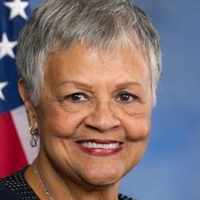
Bonnie Watson Coleman
Representative
NJ-12
This resolution acknowledges the Black Women Best (BWB) framework, which seeks to empower and improve life for all through policies like guaranteed income, expanded tax credits, and equitable healthcare access. It supports centering the lived experiences of Black women in policymaking to ensure a more just future for everyone. The bill encourages using the BWB framework as a guideline for creating better public policies. Finally, it considers legislative proposals aimed at repairing historical disparities Black women face.
New Economic Framework Proposes Guaranteed Income and $23,000 Pay Gap Fix for Black Women
This resolution introduces the 'Black Women Best' (BWB) framework, a policy shift that centers the economic and social experiences of Black women to improve the economy for everyone. The core idea is that if the system works for those who have been most marginalized, it will naturally function better for all of us. The bill highlights a staggering $23,210 annual pay gap between Black women and white, non-Hispanic men, and it proposes a suite of heavy-hitting solutions to close it, including guaranteed income programs and direct cash transfers. It’s not just about the paycheck, though; the resolution calls for expanding the Child Tax Credit and the Earned Income Tax Credit—moves that would put more money directly back into the pockets of working families during tax season.
The Paycheck and the Pocketbook
To address the fact that Black women earn roughly 63 to 66 cents for every dollar earned by their white male counterparts, the resolution pushes for 'sectoral bargaining' and increased worker power. For a retail manager or a construction worker, this could mean more leverage to negotiate better wages and benefits across entire industries, not just at a single job site. By emphasizing hazard pay and stronger labor laws, the bill aims to stabilize the financial lives of those who kept the country running during the recent economic downturns, where Black women lost over 300,000 jobs in just a five-month span in 2025.
Healthcare and Housing Overhaul
The resolution doesn't stop at the office; it moves into the doctor's office and the living room. With over 4 million Black women relying on Medicaid, the bill advocates for more equitable healthcare access and providers who actually reflect the patients they serve. It also tackles the 'cost-burdened' reality of housing, where high rents and eviction risks eat up too much of a family's monthly budget. By calling for permanent funding for home and community-based services, the bill looks to help people with disabilities stay in their homes rather than being forced into institutional care, a move that provides both dignity and long-term cost savings for the government.
Classroom Shifts and Future Hurdles
One of the most significant shifts proposed is in the education system, specifically calling for a prohibition on policing in schools in favor of 'restorative justice.' This means moving away from the school-to-prison pipeline and toward conflict resolution that keeps kids in the classroom. While the intent is to create a safer, more supportive environment for students, the implementation will be the real test. Because the bill uses somewhat vague terms like 'equitable healthcare' and 'restorative justice,' the actual impact will depend on how local school boards and state health departments interpret these rules. It’s a bold vision for a more inclusive economy, but the devil—as always—will be in the details of how these programs are funded and managed on the ground.