This resolution censures President Trump and Special Envoy Witkoff for violating the Foreign Emoluments Clause by accepting undisclosed payments from the UAE and demands they divest from related foreign business interests.
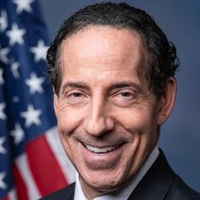
Jamie Raskin
Representative
MD-8
This resolution expresses the sense of the House that President Trump and Special Envoy Witkoff violated the Foreign Emoluments Clause by accepting undisclosed payments linked to a secret deal with an entity substantially funded by the UAE. It demands they immediately turn over all such payments to the Treasury and divest from any business interests connected to foreign governments. The bill cites specific financial transactions and subsequent U.S. policy actions favoring the UAE as evidence of a grave conflict of interest.
House Resolution Demands Trump, Witkoff Divest Foreign Business, Turn Over UAE Payments
Alright, let's cut through the noise on this one. We're looking at a House resolution that isn't pulling any punches. It's basically saying President Trump, his Special Envoy Steven Witkoff, and other federal officials need to immediately hand over any money they've received from the United Arab Emirates or other foreign governments to the U.S. Treasury, and get rid of any business ties to those governments. Why? Because the House believes they've been violating the Foreign Emoluments Clause of the Constitution.
The Constitution's 'No Gifts' Rule
So, what's this "Foreign Emoluments Clause"? Think of it like this: if you're working for the U.S. government, you can't just take gifts or payments from a foreign country without Congress's say-so. It's in Article I, Section 9, Clause 8 of the Constitution, and it's there to prevent foreign governments from buying influence. This resolution specifically calls out President Trump and Special Envoy Witkoff, alleging they've sidestepped this rule by taking payments linked to a cryptocurrency platform they co-founded called World Liberty Financial.
The Secret Deal and the Semiconductor Connection
Here's where it gets interesting, and frankly, a bit sticky. The resolution details a secret deal, signed just four days before President Trump took office in January 2025. His son, Eric Trump, allegedly sold nearly half of World Liberty Financial for a cool $500 million to an investment firm partly owned by the UAE. A big chunk of that money, the resolution claims, came from Sheikh Tahnoon bin Zayed Al Nahyan, who's not just a member of the UAE royal family but also their National Security Advisor. The resolution states that the Trump and Witkoff families then received immediate payouts of $187 million and $31 million, respectively, from this deal.
Now, the resolution connects these payments to some big moves the U.S. government made shortly after. On President Trump's first day, he announced a huge AI-focused data center venture, naming Sheikh Tahnoon's MGX Fund as an investor. Then, in May and November 2025, the administration committed to and authorized exporting hundreds of thousands of advanced American semiconductor chips to the UAE, with a significant portion going to an entity controlled by Sheikh Tahnoon. The resolution suggests that the timing, terms, and sheer size of these investments create a strong inference that the U.S. government's actions on those semiconductor chips were directly influenced by President Trump's personal business dealings. Essentially, it's asking if Uncle Sam's foreign policy decisions were being swayed by personal bank accounts.
What This Means for "The People"
For most of us, this isn't about our daily grind, but it hits at something fundamental: trust in government. If true, it means that our leaders might be making decisions based on their own wallets rather than what's best for the country. For anyone who believes in a level playing field and ethical conduct from public servants, this is a big red flag. It also touches on national security, as the resolution points out, because if foreign governments can influence U.S. policy through financial ties, that's a serious risk.
This resolution isn't just a slap on the wrist; it's a formal censure and a demand for concrete action. It’s a call for President Trump and Special Envoy Witkoff to not only turn over the alleged payments to the Treasury but also to divest from any business interests tied to foreign governments, specifically mentioning the MGX Fund and other entities linked to Sheikh Tahnoon. It's a clear signal from the House that they believe the constitutional line has been crossed and they want to see it corrected.