This resolution censures Representative Andrew Ogles for his history of Islamophobic rhetoric and misrepresentation of his professional background, and removes him from the House Committee on Homeland Security.
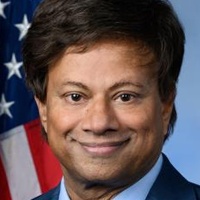
Shri Thanedar
Representative
MI-13
This resolution censures Representative Andrew Ogles for spreading Islamophobic, racist, and anti-immigrant rhetoric, as well as for providing false information regarding his educational and professional background. Consequently, the measure mandates a formal public censure and removes Representative Ogles from his position on the House Committee on Homeland Security.
House Resolution Targets Rep. Ogles for Removal from Homeland Security Committee Over Conduct and Credentials
This resolution is a formal disciplinary move against Representative Andrew Ogles of Tennessee, aiming to strip him of his seat on the House Committee on Homeland Security and subject him to a public censure. The bill points to specific public statements made on March 9, 2026, where Ogles allegedly claimed on social media and podcasts that Muslims do not belong in American society. Beyond the rhetoric, the resolution also hits him for reportedly providing false information about his educational and professional history to the Federal Election Commission and the House Clerk. If passed, Ogles would have to stand in the 'well' of the House—the front of the chamber—while the Speaker reads the full list of charges against him to his face.
The Security Seat Shuffle
The most immediate practical impact of this bill is the 'Removal from Committee' provision. The House Committee on Homeland Security handles everything from border security to cybersecurity and counterterrorism. The resolution argues that because Ogles has used his official accounts to suggest Muslim elected officials are part of a conspiracy to overthrow the government, he is fundamentally unfit to oversee national security policy. For the average person, this is about who sits at the table when high-level security decisions are made; the bill explicitly states his 'predisposition to discriminate' makes his role on the committee inappropriate.
Fact-Checking the Resume
While the headlines might focus on the social media firestorm, a significant chunk of this resolution deals with the paperwork. It charges Ogles with providing false professional background info to federal agencies. Think of it like a background check for a high-level job—except the job is representing thousands of people. By citing these false filings, the resolution seeks to uphold the principle that the people we send to D.C. have to be honest about who they are on their official forms. It’s a move toward institutional accountability, ensuring that the records held by the Clerk of the House aren't just fiction.
The High Price of Public Speech
This resolution reinforces a standard for how members of Congress use their official 'X' and Instagram accounts. It highlights that while the First Amendment protects religious freedom for all—a point the bill explicitly reaffirms—it doesn't protect a lawmaker from the professional consequences of using official government channels to spread 'Islamophobic, racist, and anti-immigrant rhetoric.' By calling for a public censure, the House is essentially attempting to draw a line in the sand: you can have your opinions, but if you use your official platform to attack the religious identity of American citizens, you might lose your power to influence national policy.