This bill recognizes the historic significance of the Greensboro Four sit-in, which launched a nationwide movement against racial inequality, and encourages its inclusion in educational curricula.
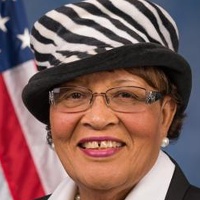
Alma Adams
Representative
NC-12
This bill recognizes the historic 1960 Greensboro Four sit-in, honoring the students whose peaceful protest launched a nationwide movement against segregation. It designates February 1, 2026, as the 66th anniversary, coinciding with the start of Black History Month. Furthermore, the bill encourages states to include the Greensboro Four's contributions in educational curricula.
Greensboro Four Resolution Designates February 1, 2026, as 66th Anniversary of Historic Sit-In
This resolution officially marks February 1, 2026, as the 66th anniversary of the Greensboro Four sit-in, a pivotal moment that coincided with the start of Black History Month. The legislation honors Joseph McNeil, Jibreel Khazan, Franklin McCain, and David Richmond—four North Carolina A&T students who, on February 1, 1960, were refused service at a F. W. Woolworth lunch counter. By documenting the escalation of this protest into a movement involving 700,000 people and 3,000 arrests, the bill formalizes the historical record of how a peaceful six-month demonstration successfully integrated the Woolworth counter by July 26, 1960.
The Blueprint for Change
The bill does more than just circle a date on the calendar; it specifically credits the Greensboro Four as the catalyst for the Student Non-Violent Coordinating Committee (SNCC). For anyone who has ever wondered how a small local action turns into a national shift, this resolution spells it out. It acknowledges the support from female students at Bennett College and Greensboro Women's College, highlighting that the movement wasn't just four guys in a vacuum—it was a community-wide effort. For today’s workers and students, the bill serves as a formal recognition of how nonviolent resistance can disrupt the status quo to create more equitable public spaces.
History in the Classroom
A key practical takeaway from this resolution is its direct encouragement to states to integrate the Greensboro Four’s story into their educational curricula. While the federal government isn't mandating a specific lesson plan here, the resolution sets a national standard for what students should know about civil rights history. If you're a parent or an educator, this means you might see a shift in social studies materials to include more detailed accounts of these 1960 events. The bill explicitly states that the nation’s diversity "enriches and strengthens" the country, framing this history not just as a past event, but as an ongoing lesson in the effectiveness of nonviolent social change.