This resolution expresses the House's sense that the Football Bowl Subdivision postseason should be reformed to prioritize broad athletic opportunity and financial sustainability, supporting innovative proposals like Coach Mike Leach's for expanded, bracketed playoff access.
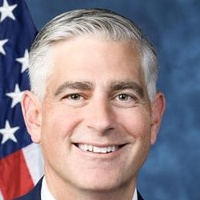
Michael Baumgartner
Representative
WA-5
This resolution expresses the sense of the House that the Football Bowl Subdivision postseason should prioritize broad athletic opportunity and financial sustainability. It honors the late Coach Mike Leach's vision for expanding the championship format to a broad, bracketed tournament to enhance competitive balance. The bill encourages serious consideration of innovative proposals that mitigate the anticompetitive effects of the current narrow playoff structure.
House Resolution Pushes for 32-Team College Football Playoff to Fix Financial Deficits
This resolution, which is essentially the House of Representatives expressing its strong opinion, tackles the billion-dollar business of college football. It argues that the current structure of the Football Bowl Subdivision (FBS) postseason is broken and needs a massive overhaul. Specifically, it throws support behind the late Coach Mike Leach’s vision for a massive, bracketed playoff—think 16, 32, or even 64 teams—to replace the current narrow 12-team College Football Playoff (CFP). The core idea is that the current system is anticompetitive, concentrates revenue unfairly, and is actively harming the financial sustainability of most college athletic departments.
The Billion-Dollar Problem Child
If you follow college sports, you know the money is huge, but this resolution uses hard numbers to show that the wealth distribution is completely out of whack. Right now, the CFP is essentially a closed shop. The resolution notes that the two powerhouse conferences, the SEC and the Big Ten, gobble up about 29 percent each of the CFP’s base revenue distributions. Meanwhile, the other half of the FBS, the Group of Five conferences, collectively split a paltry 9 percent. This isn’t just about bragging rights; it’s about survival. The resolution points out that the median FBS program is operating at a deficit of about $19.3 million annually. In short, the rich are getting richer, and everyone else is bleeding money just trying to keep up. This structure creates an economic barrier that makes it nearly impossible for most teams to compete for a championship.
The Leach Playoff: Bracketology for Financial Health
The resolution backs Coach Leach’s idea of expanding the playoff to a true bracket, similar to what you see in March Madness or even the lower tiers of NCAA football (FCS, Division II, and III all use large, bracketed tournaments). Why does this matter to the average fan or the school treasurer? Because broader access means more teams get a meaningful shot at the title, and more importantly, more schools get a piece of the massive media revenue pie. The resolution suggests that a more unified approach to selling these media rights could unlock an additional $4 to $7 billion for the sport overall, and a bigger playoff ensures that money is spread more equitably. For the athletic director at a mid-major school, this cash injection could mean the difference between cutting non-revenue sports and achieving financial stability.
Who Wins and Who Loses in This Scenario
If this vision were implemented, the clear winners would be the schools outside the current power structure—the Group of Five and any student-athletes at those schools who currently have almost zero realistic path to a national title. It would also help the athletic departments struggling to manage their budgets, as more playoff access means more revenue distribution. The people who might feel the squeeze are the current dominant conferences, the SEC and the Big Ten. Their current near-monopoly on playoff access and revenue concentration would be diluted. Essentially, the resolution argues that competitive balance and financial sustainability are directly linked, and the current narrow playoff system is an anticompetitive drag on the sport’s overall health.