The FRONTIER Act establishes a federal regulatory framework for the oversight, safety assessment, and transparency of large-scale artificial intelligence models to mitigate catastrophic risks.
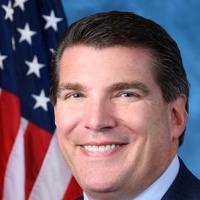
Jay Obernolte
Representative
CA-23
The FRONTIER Act establishes a comprehensive federal oversight framework to identify, assess, and mitigate catastrophic risks associated with the development and deployment of large-scale artificial intelligence models. The bill mandates that developers of these high-powered models implement rigorous safety frameworks, undergo independent third-party audits, and report critical safety incidents to the Department of Commerce. Additionally, it grants the Secretary of Commerce emergency authority to restrict or suspend AI activities that pose an imminent threat to public safety or national security.
FRONTIER Act Mandates Safety Audits for AI Giants and Grants Commerce Secretary 'Kill Switch' Authority over Advanced Models.
The FRONTIER Act is essentially a safety manual for the world’s most powerful computers. It targets 'frontier models'—AI systems like GPT-4 or Gemini that are trained using massive amounts of computing power (specifically more than 10^26 operations). The bill requires companies that build these models to prove they won't accidentally help someone build a biological weapon, launch a massive cyberattack, or simply stop following human instructions. If you're a developer spending over $1 billion on AI, the government is now asking to see your homework before you hit 'release.'
The Safety Inspection
Under Section 4, 'Large Frontier Developers'—think the big tech names we all know—must create a public 'Frontier AI Framework.' This isn't just a mission statement; it’s a technical document explaining exactly how they test for 'catastrophic risks' and what cybersecurity they have in place to keep hackers from stealing the model's 'weights' (the secret sauce that makes the AI work). For the absolute biggest players (those with $5 billion in revenue and $10 billion in AI spending), the stakes are higher: they must hire an Independent Verification Organization (IVO) to perform audits every six months. It’s like a building inspector for code, ensuring that the AI’s benefits actually outweigh the risk of it causing over $1 billion in damage or killing more than 50 people (Section 2).
The Emergency Brake
One of the most intense parts of this bill is Section 8, which gives the Secretary of Commerce the power to issue an emergency order to shut down or restrict an AI model. If the Secretary finds an 'imminent catastrophic risk,' they can effectively pull the plug on a model’s development or deployment. While there is a process for the tech companies to appeal, the government can issue a 'provisional order' that lasts up to 45 days before a full hearing even happens. For a software engineer or a startup relying on a specific AI tool, this means the platform you’re building on could technically be sidelined overnight if the government decides it’s a public safety threat.
Accountability and Red Tape
While the bill aims to keep us safe, it creates a complex new bureaucracy. Section 5 gives these new IVO auditors a 'get out of jail free' card—they are generally immune from being sued if an AI they cleared ends up causing a disaster, unless they committed 'willful misconduct.' This might make you wonder if the auditors will be as tough as they need to be. Additionally, Section 9 tells states to back off; it preempts local governments from making their own AI safety or reporting laws. So, if you live in a state like California or New York that wanted stricter rules on AI transparency, those local laws would be wiped out in favor of this federal standard. For the average person, this means your AI safety protections will be handled entirely in D.C., not your state capital.