This bill modernizes the Federal Employees’ Compensation Act by requiring the use of managed care networks for injured federal workers, establishing standardized treatment protocols, and implementing advanced fraud detection tools to improve efficiency and reduce costs.
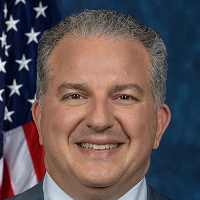
Jimmy Patronis
Representative
FL-1
The FECA Modernization and Cost Containment Act of 2026 aims to update the federal workers' compensation system by requiring agencies to utilize managed care networks for non-emergency medical services. This legislation seeks to reduce taxpayer costs and improve clinical outcomes by implementing standardized treatment protocols and enhanced fraud detection tools. Additionally, the bill establishes a review board to oversee network performance and mandates a long-term evaluation of the program's efficiency.
Federal Workers’ Compensation Overhaul Mandates Managed Care Networks and AI Fraud Detection by 2027
The FECA Modernization and Cost Containment Act of 2026 is the first major update to federal workers' compensation since the Ford administration. At its core, the bill shifts how injured federal employees receive medical care, moving away from a system where workers have broad freedom to choose their doctors. Instead, Section 3 requires every federal agency to contract with a Managed Care Network (MCN). If you’re a federal employee—whether you’re a TSA agent, a mail carrier, or a desk worker at the Social Security Administration—an on-the-job injury will now mean you must use a doctor within your agency’s specific network for all non-emergency care. This is a significant shift designed to align federal benefits with the private sector’s 'managed care' model, aiming to lower costs that the bill notes are currently higher than industry standards.
The New Doctor-Patient Dynamic
Under this plan, your ability to pick a specialist is tied directly to your agency’s contract. While Section 3 allows for out-of-network care if the MCN can’t provide a specific service, the default is a closed loop. For a park ranger in a remote area, this could be tricky; the bill requires networks to keep providers within a 'reasonable distance' of worksites, but it doesn’t define what 'reasonable' means in miles or minutes. If you disagree with a network doctor’s diagnosis, the bill does guarantee you a second opinion, but that opinion must come from another provider within that same MCN. This structure aims to streamline recovery using 'standardized treatment protocols'—basically a playbook for how specific injuries should be treated—to ensure consistency across the board.
AI on the Watchdog Beat
The legislation also takes a high-tech swing at fraud. Section 3 authorizes the Department of Labor to hire outside companies to monitor claims using predictive analytics and artificial intelligence. These tools will scan historical data and medical records to flag 'suspicious' claims that don't fit typical patterns. For the average honest worker, this shouldn't change much, but there is a real-world risk of 'false positives' where a legitimate but unusual injury could get tangled in an automated red-tape review. To balance this, a new 16-member Review Board will be created to oversee these networks. However, only two of those seats are reserved for employee representatives, while the rest are filled by agency heads, network executives, and healthcare providers.
Transition and Tracking the Tab
Agencies have one year from the bill's signing to submit their transition plans to the Secretary of Labor. This isn't an overnight switch; the law officially kicks in one year after enactment to give HR departments time to secure these massive healthcare contracts. To ensure this isn't just adding another layer of bureaucracy, Section 5 mandates the GAO to run a full audit five years in. They’ll be looking at the hard numbers: Did the AI actually stop fraud? Did the MCNs actually save taxpayers money? And most importantly, did injured workers actually get back to work faster? For the 2.8 million federal employees, the next few years will determine if this 'modernization' feels like an upgrade or a restriction.