This bill makes foreign government officials who engage in economic discrimination against U.S. persons inadmissible to and deportable from the United States.
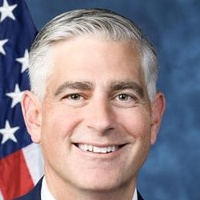
Michael Baumgartner
Representative
WA-5
The "No Racketeers on our Shores Act" amends the Immigration and Nationality Act to make foreign government officials inadmissible to and deportable from the United States if they engage in economic discrimination against U.S. persons. This legislation targets officials who impose unfair or disproportionate regulatory, legal, or administrative burdens on U.S. citizens compared to similarly situated non-U.S. parties.
New Bill Targets Foreign Officials with Deportation for 'Economic Discrimination' Against U.S. Businesses
The 'No Racketeers on our Shores Act' introduces a significant shift in immigration policy by targeting foreign government officials who use their power to squeeze U.S. citizens or companies. Under this bill, any foreign official who subjects a U.S. person to 'economic discrimination'—such as unfair fines, excessive tax assessments, or biased licensing hurdles—would be barred from entering the United States or could be deported if they are already here. By amending the Immigration and Nationality Act (specifically sections 212 and 237), the legislation turns a diplomat's or regulator's professional conduct abroad into a direct trigger for losing their U.S. visa privileges.
The Price of Playing Favorites
The bill defines 'economic discrimination' as any regulatory or legal burden that is more severe, more frequent, or less fair than what is imposed on non-U.S. parties. Imagine a software developer from your hometown trying to launch an app in a foreign market, only to be hit with a $50,000 'compliance fee' that local competitors don't have to pay. Under this bill, the foreign official who signed off on that fee could find themselves on a U.S. 'no-entry' list. While this sounds like a win for American fairness, the bill’s language is exceptionally broad. It covers everything from 'investigations' to 'tax assessments,' meaning a foreign tax auditor simply doing their job could potentially be flagged if their country's tax code happens to hit a U.S. multinational harder than a local mom-and-pop shop.
Blurred Lines and Boardroom Battles
Because the bill’s definitions are quite vague, it creates a high level of uncertainty for anyone working in international trade or diplomacy. The term 'similarly situated party' is notoriously difficult to define; for instance, is a massive U.S. tech giant 'similarly situated' to a medium-sized European firm? If a foreign regulator treats them differently, are they now a 'racketeer' in the eyes of U.S. immigration law? This ambiguity gives U.S. authorities massive discretion to decide who gets kicked out, which could lead to inconsistent enforcement. For a small business owner relying on stable trade relations, this could create a messy environment where foreign governments retaliate by making life harder for Americans working abroad.
Diplomatic Fallout at the Border
The real-world impact could be a 'tit-for-tat' cycle that goes beyond just paperwork. If the U.S. starts deporting foreign officials for their regulatory decisions, those countries might respond by targeting U.S. executives or diplomats with similar measures. While the bill aims to protect U.S. interests from unfair treatment, the lack of clear procedural safeguards or an appeals process for the accused officials means these decisions could be made behind closed doors. For everyday people, this might mean higher costs for imported goods or more red tape for digital nomads and international workers if global diplomatic relations sour over a disputed tax fine or a denied business license.