The Welcome Back to the Health Care Workforce Act establishes a grant program to help internationally educated health care professionals enter and advance within the U.S. workforce, with a focus on addressing shortages in rural and underserved communities.
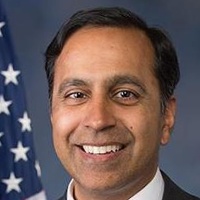
Raja Krishnamoorthi
Representative
IL-8
The "Welcome Back to the Health Care Workforce Act" establishes a federal grant program to help internationally educated health care professionals integrate into the U.S. workforce. By funding both system-level improvements and individual support services, the act aims to address critical staffing shortages, with a priority on serving rural and underserved communities.
Welcome Back to the Health Care Workforce Act: New Grant Program Aims to Fast-Track Internationally Trained Medics into U.S. Hospitals by 2027
If you’ve ever waited six months for a specialist appointment or sat in an ER waiting room for eight hours, you know the U.S. healthcare system is short-staffed. Meanwhile, there are thousands of people living in the U.S. who were doctors, nurses, or technicians in their home countries but are currently working delivery or retail jobs because the path to U.S. licensing is a bureaucratic nightmare. This bill aims to bridge that gap by creating a federal grant program that helps internationally educated healthcare professionals get their credentials recognized and get back into the exam room. Starting in 2027, the Secretary of Health and Human Services will begin handing out funds to partnerships—think a local hospital teaming up with a community college—to build a roadmap for these skilled workers to join the American workforce.
Clearing the Licensing Hurdle
The heart of this bill is about removing the 'red tape' that keeps qualified people on the sidelines. Under the individual support provisions, grant money can be used to pay for those incredibly expensive board exams, accelerated English as a Second Language (ESL) courses, and career coaching. For a nurse who moved here from the Philippines or a doctor who fled a conflict zone, this means help with the credentialing evaluation process—basically the paperwork that proves their foreign degree is legit—and even assistance with living expenses or transportation while they study for U.S. certification. By covering these costs, the bill attempts to turn a years-long struggle into a streamlined transition, focusing heavily on getting these professionals into rural areas and communities where the doctor-to-patient ratio is currently looking pretty grim.
Building a Better Pipeline
It’s not just about helping individuals; the bill requires that at least 20 percent of the money goes toward 'system-level' changes. This is the 'big picture' stuff, like building networks between hospitals and schools so that prerequisite classes actually match what employers need. It also encourages 'career ladders'—so if someone starts as a medical assistant, there’s a clear, funded path for them to become a registered nurse or a lab tech. For the average patient, this could mean seeing a more diverse workforce that speaks more languages and understands different cultural backgrounds, which often leads to better care and fewer misunderstandings in the hospital.
Keeping the Receipts
Because this involves federal tax dollars, the bill sets some ground rules to make sure the money isn't just disappearing into a black hole of paperwork. Administrative costs are capped at 10 percent, meaning 90 cents of every dollar should theoretically go toward the actual programs and people. There’s also a 'supplement, not supplant' rule, which is policy-speak for 'you can’t use this federal money to replace the money you were already planning to spend.' Every year, these organizations have to report back on exactly how many people they helped, what jobs those people landed, and even where they went to school originally. While the bill leaves some room for the Secretary to add more requirements later, the goal is clear: get trained professionals out of the gig economy and back into the hospitals where we need them.