This Act establishes the Local Foods for Healthy Schools Program to fund state agencies in purchasing and distributing locally sourced foods to participating schools.
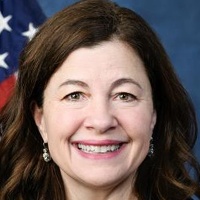
Kristen McDonald Rivet
Representative
MI-8
The Local Foods for Healthy Schools Act of 2026 establishes a new federal program to increase the availability of locally sourced food in schools. This act directs the Secretary of Agriculture to provide noncompetitive funding to state agencies to purchase local foods directly from producers for distribution to participating schools. The program aims to support local agriculture while ensuring students have access to fresh, regional products.
Local Foods for Healthy Schools Act Sets $200 Million Annual Budget to Put Fresh, Local Farm Goods in Cafeterias by 2026
The Local Foods for Healthy Schools Act of 2026 is essentially a massive logistics upgrade for school lunches. It directs the Secretary of Agriculture to bypass the usual red tape and sign direct agreements with state agencies to buy food from local farmers and ranchers. Starting in 2026, the bill taps into $200 million from the Commodity Credit Corporation every year, plus it authorizes another $200 million in potential funding. This isn't just a suggestion for schools to 'buy local'; it’s a funded mandate to create a pipeline from nearby fields to the plastic trays in the cafeteria. For a parent, this means the apple in your kid’s lunchbox likely grew in your own state rather than being shipped across the country. For a local farmer, it opens up a massive, reliable customer that was previously buried under bureaucratic procurement rules.
From Farm to Homeroom
The bill defines 'local' with some common-sense boundaries: food must generally be produced within the same state or within a 400-mile radius of the school (Sec. 2). This covers everything from fresh produce to frozen and canned goods, provided they are 'minimally processed.' To make this work for smaller operations, the government will actually pick up the tab for food safety certifications that usually cost farmers a fortune. If you’re a small-scale poultry farmer or a greenhouse grower, the bill allows the state to give you the cash directly or buy your products for the schools. It also sets a 5% cap on funds used for training, ensuring that 95% of the money is actually going toward food and the logistics of moving it.
The Logistics of the Lunch Line
Funding is handed out through a formula: every state gets a base amount, and the rest is divvied up based on how many students are actually enrolled in meal programs. To keep things transparent, states have to post a public report on their educational agency’s website within 90 days of spending the money, listing exactly which producers got paid and what they sold (Sec. 2). There is a bit of a 'use it or lose it' policy here; if a state doesn't spend its share, the feds will claw it back and give it to a state that has the capacity to buy more. This keeps the pressure on state agencies to actually move the needle rather than letting the funds sit in an account.
Room for Interpretation
While the 400-mile rule is the standard, the bill gives the Secretary of Agriculture some wiggle room to approve other definitions of 'local' proposed by states. This 'Medium' level of vagueness means that in a massive state like Texas or a tiny one like Rhode Island, the definition of a 'local producer' might look very different. While this flexibility helps account for geography, it also means the impact could vary depending on how your specific state defines its borders. Additionally, while the bill provides a 'supplement, not replace' guarantee—meaning states can't use this federal cash to justify cutting their own school lunch budgets—monitoring that kind of shell game is notoriously difficult. For now, the focus is clearly on boosting the bottom line for regional growers while trying to improve the quality of what's on the menu.