This Act seeks to combat squatting by withholding federal community development funds from local governments that grant tenancy rights to squatters and by prohibiting federal mortgage support for properties in those areas.
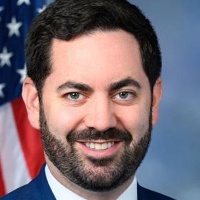
Michael Lawler
Representative
NY-17
The Protecting Homeowners from Squatters Act aims to prevent squatters from gaining tenancy rights and mandates swift removal by law enforcement. This bill penalizes local governments that permit squatting by withholding federal community development funds. Furthermore, it cuts off federal mortgage support for properties located in areas that fail to comply with these anti-squatting regulations.
Protecting Homeowners from Squatters Act Proposes Withholding Federal Funds and Mortgage Support from Cities with Lenient Squatting Laws
The Protecting Homeowners from Squatters Act aims to fundamentally change how local governments handle unauthorized occupants by hitting them where it hurts: their federal funding. Under this bill, the Department of Housing and Urban Development (HUD) would be required to cut off community development funds to any local government that grants tenancy rights to squatters or fails to remove them. The bill defines squatting as living on a property without permission or a lease for 10 to 14 days, and it explicitly states that these individuals should have no legal standing as tenants. Beyond just city budgets, the bill would also block federal support for home loans—including FHA, VA, and USDA loans—for any residential property located within a penalized city’s jurisdiction.
The Price of Policy
For a local city or town, losing community development funds isn't just a line item on a spreadsheet; it often means the end of local park improvements, street repairs, or senior center programs. If your local government decides to maintain existing tenant protection laws that happen to conflict with this bill’s strict 10-day definition of squatting, the entire community could see a freeze on federal resources. This creates a high-stakes environment where a city might be forced to choose between its own legal procedures for housing disputes and the federal money that keeps local infrastructure running. For a family in one of these areas trying to buy a first home, the impact is even more direct: if your city is on the 'prohibited list,' you might find yourself unable to secure an FHA or VA loan, effectively locking you out of the housing market because of a local policy dispute you didn't start.
Definitions and Deadlines
The bill introduces a bit of a technical headache with its shifting timelines. In Section 2, a 'squatter' is defined as someone staying for 10 days regarding community fund eligibility, but that number jumps to 14 days when it comes to blocking mortgage support. For a landlord or a homeowner dealing with an unwanted guest, this might sound like a win for property rights, but for someone in the middle of a messy roommate breakup or a legitimate lease dispute, these short windows could lead to rapid removal without the usual court-ordered due process. Because the bill requires law enforcement to act 'quickly' to remove and prosecute these individuals, there is a real risk that people who aren't actually squatters—like a sub-letter who lost their paperwork—could be swept up in the rush to protect a city’s federal funding.
Economic Ripple Effects
While the goal is to protect property values from the risks associated with unauthorized occupants, the 'all or nothing' approach to federal mortgage support could backfire on local economies. By prohibiting the purchase or securitization of loans by Fannie Mae or Freddie Mac in penalized areas, the bill could cause property values to dip as the pool of eligible buyers shrinks. A small business owner looking to sell their home or a veteran trying to use their benefits might find their property is suddenly toxic to lenders simply because of the city’s zip code. The bill requires HUD to publish a public 'shame list' of prohibited local governments every year, which could inadvertently serve as a map of areas where it’s becoming harder and more expensive to buy a home.