This act establishes a federal grant program to help states and tribal governments develop, implement, or improve their firearms dealer licensing programs.
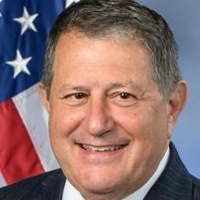
Joseph Morelle
Representative
NY-25
The State Firearms Dealer Licensing Enhancement Act establishes a federal grant program administered by the Attorney General to help states and tribal governments develop, improve, or evaluate their firearms dealer licensing programs. Eligible applicants must already have a law in place requiring state or tribal licensing for firearms dealers, which includes specific standards for application, inspection, and enforcement. Grant recipients must report annually on their licensing activities, and the Attorney General will report findings to Congress.
State Firearms Dealer Licensing Enhancement Act Proposes $2.5 Million Grants to Tighten Gun Store Oversight
The State Firearms Dealer Licensing Enhancement Act aims to modernize how states and tribal governments keep tabs on gun shops. By amending the Omnibus Crime Control and Safe Streets Act of 1968, the bill creates a competitive grant program where the Attorney General can award up to $2.5 million per year to jurisdictions that implement their own dealer licensing systems. It is not just a blank check; to get the money, states must prove they have laws requiring dealers to hold both a federal and a state license, undergo regular inspections, and face real penalties—like license suspension or criminal charges—if they break the rules.
Raising the Bar for Gun Shops
For a local gun store owner or a customer, the most immediate change would be the "three-year rule." Under Section 2, any state receiving these grants must limit firearms dealer licenses to a maximum of three years. This means more frequent paperwork and renewals for business owners, but it also ensures that the government is checking in on these businesses more often than they might be currently. The bill also mandates that states have a clear application process and a system for civil or criminal penalties. For someone living in a community concerned about illegal straw purchases, this provision is designed to ensure that the shops on the corner are following the letter of the law and are being held accountable if they don't.
Strengthening the Paper Trail
A significant chunk of this bill focuses on data. Grant recipients are required to submit annual reports detailing exactly how many inspections they performed, what violations they found, and how many licenses were revoked. This information isn't just for the bureaucrats; the Attorney General must compile this into a public report for Congress every year. While this creates a new layer of administrative work for state agencies and tribal governments, it provides a clearer picture for the public of which jurisdictions are actively monitoring their firearms trade and where the system might be breaking down.
Local Impact and Potential Hurdles
While the grants go to the state or tribal level, the bill specifically allows for "subawards" to local government units. This means a city’s licensing board or a county sheriff’s office could potentially see a boost in funding to hire more inspectors or upgrade their tracking software. However, the bill leaves some room for interpretation on what a "thorough" inspection looks like, which is where the medium level of vagueness comes in. Depending on how a state writes its own law to qualify for the grant, a small business owner might find themselves facing much more rigorous (and potentially time-consuming) inspections than their neighbor in a state that doesn't participate in the program.