This bill establishes regional boards to study and report best practices for electric load forecasting, amends PURPA to mandate the incorporation of these practices, and requires states to update energy conservation plans accordingly.
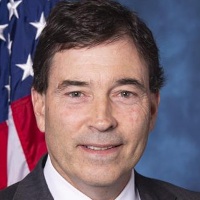
Troy Balderson
Representative
OH-12
The Load Forecasting Enhancement Act establishes regional joint boards to study and identify best practices for electric load forecasting to improve grid reliability and affordability. It then mandates that electric utilities incorporate these best practices into their forecasting methods through an amendment to PURPA. Finally, the bill requires states to update their energy conservation plans to include procedures for improving load forecasting accuracy and transparency.
Load Forecasting Enhancement Act Aims to Stabilize Power Grids and Energy Bills with Regional Data Overhaul
The Load Forecasting Enhancement Act is essentially a massive upgrade to the crystal ball that utility companies use to guess how much power we’re going to need. Right now, if a utility company under-forecasts, we risk blackouts; if they over-forecast, they might build expensive, unnecessary power plants that show up on your monthly bill. This bill requires the Federal Energy Regulatory Commission (FERC) to set up regional boards within 90 days to study the best ways to predict electricity demand. These boards will look at everything from data modeling to how big new factories or data centers—those massive 'industrial facilities' mentioned in Section 2—actually impact the local power supply.
The Data-Driven Power Play
Under Section 2, these regional boards aren't just looking at historical weather patterns. They are required to examine 'economic development projections' and whether large commercial facilities have made real 'financial commitments' before utilities factor them into the grid's future. For a small business owner or a homeowner, this means more accurate planning. If a massive tech campus is planned for your town, this bill pushes for a standardized way to figure out if that campus will strain your local transformer or if the utility is just using it as an excuse to hike rates for infrastructure that isn't quite ready yet. FERC has one year to turn these findings into a 'best practices' report for Congress, aiming for a consistent playbook across state lines.
Setting the Standard for Your Bill
The meat of the bill lies in Section 3, which updates the Public Utility Regulatory Policies Act (PURPA). It creates a new federal standard that basically says: 'If FERC found a better way to do this, you need to use it.' State regulators have a specific timeline—starting within one year and finishing within two—to decide if they will adopt these new forecasting methods. There is a catch, though: 'nonregulated electric utilities' (like some co-ops or municipal providers) are exempt from the mandatory state consideration process. This could create a bit of a patchwork where your cousin in the next county over, served by a co-op, might not see the same transparency or updated modeling that you do if you’re served by a major investor-owned utility.
Transparency in the Conservation Plan
Finally, the bill tweaks the Energy Policy and Conservation Act to ensure that state energy plans aren't just about saving lightbulbs, but about 'oversight and transparency.' Section 4 mandates that states include programs to improve how utilities show their work. For the average person, this is about accountability. It’s the difference between a utility saying 'trust us, we need more money for power' and being able to see the actual data and methodology behind that claim. While the bill is a bit technical (rated medium on the vagueness scale because 'best practices' are yet to be defined), the goal is a more reliable grid that doesn't overcharge you for bad guesses.